Midwest
🗿 South Dakota
📍 Mount Rushmore & Badlands · United States
📍 Mount Rushmore & Badlands · United States
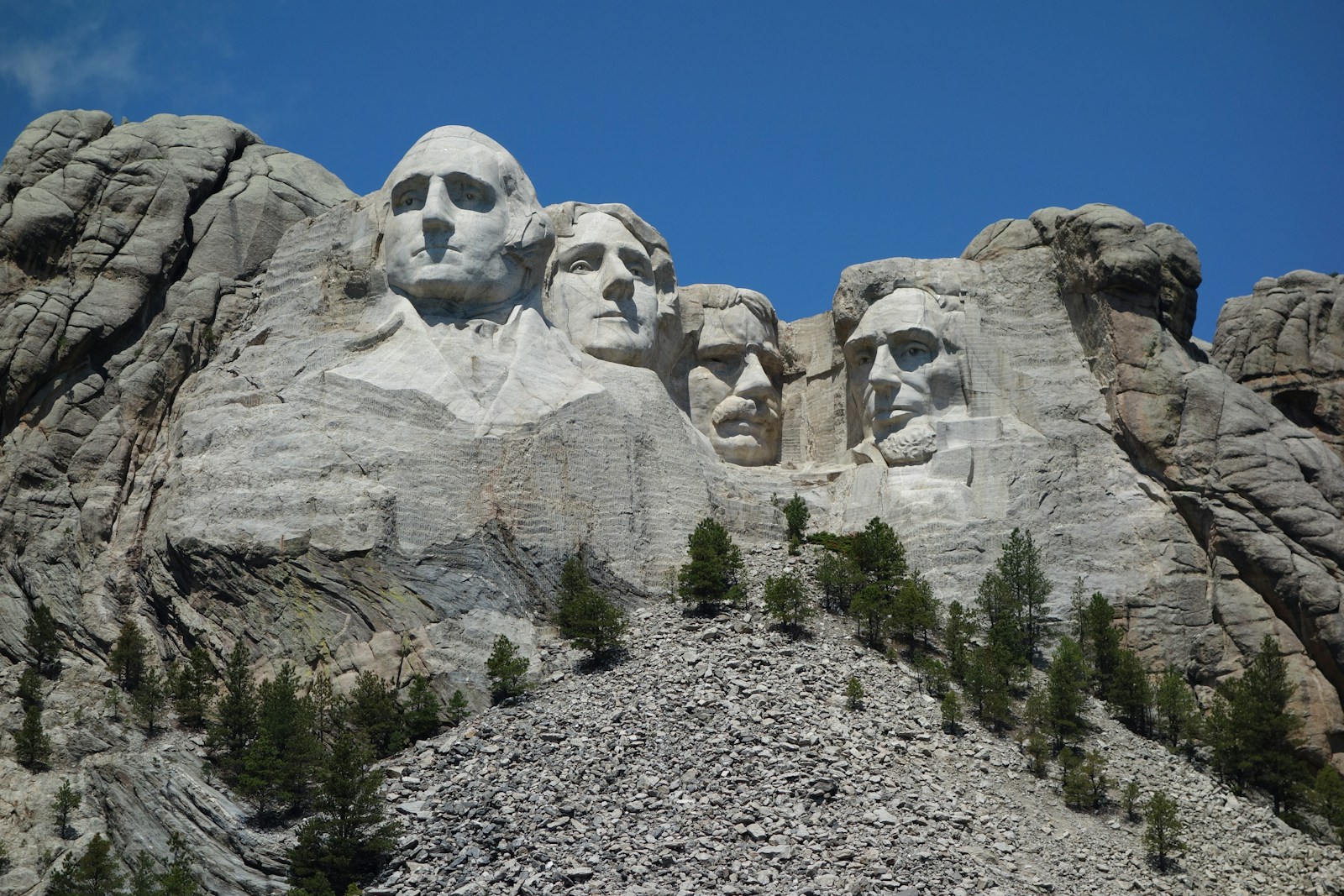
🏛 Mount Rushmore Memorial
South Dakota contains more iconic American images per square mile than almost any other state — the presidential granite faces of Mount Rushmore, the otherworldly eroded spires of the Badlands, the enormous bison herds of Custer State Park, and the ongoing mountain carving of Crazy Horse are all within a few hours of each other in the Black Hills and surrounding Plains, creating one of the country's most concentrated one-stop itineraries for American mythology and natural grandeur.
Mount Rushmore National Memorial — four 60-foot presidential faces (Washington, Jefferson, Roosevelt, and Lincoln) carved into the granite of Mount Rushmore by Gutzon Borglum between 1927 and 1941 — is simultaneously one of America's most recognizable images and one of its most complex: the granite is Lakota Sioux sacred land (the Black Hills were ceded in the 1868 Treaty of Fort Laramie and then seized when gold was discovered there in 1874), and the memorial's meaning is read very differently by Native and non-Native Americans. That complexity, honestly confronted, makes a visit more meaningful rather than less. Crazy Horse Memorial, 17 miles away, provides the Lakota perspective — a private project begun in 1948 by sculptor Korczak Ziolkowski at the request of Lakota Chief Henry Standing Bear, depicting the great war leader on horseback. At 563 feet high (the face alone is nine stories), it will be the world's largest mountain carving when complete.
Badlands National Park preserves 244,000 acres of the most dramatically eroded landscape in the Great Plains — a moonscape of jagged spires, tables, and walls in shades of gray, white, and rust-red, rising from the surrounding grassland in formations that have been depositing and eroding for 75 million years. The fossil record here is extraordinary — the world's richest Oligocene mammal fossil beds, including titanothere, three-toed horse, saber-toothed cat, and rhinoceros, are found throughout the park. The Wall Drug Store in Wall, adjacent to the park entrance, is one of America's most celebrated roadside institutions — a sprawling complex that has been placing 'Wall Drug' billboards along American highways since the 1930s.
Custer State Park's Wildlife Loop Road is one of America's finest wildlife drives — 18 miles through rolling grassland where a herd of 1,375 bison (one of the world's largest) roams freely alongside pronghorn, deer, elk, and the famous 'begging burros' (wild donkeys that approach car windows looking for treats). The annual Buffalo Roundup in September (the largest in the world) is one of South Dakota's most dramatic events. Jewel Cave National Monument, with 211 miles of surveyed passages, is the world's third-longest cave, its walls covered in calcite spar crystals that sparkle in the lamplight.
American history and mythology road-trippers, wildlife photographers targeting the Custer bison herd, geology enthusiasts, families building the classic Black Hills circuit, and those engaging seriously with Indigenous American history.
Compare prices and book your trip — hotels, flights, and guided tours.
* Links open partner sites. We may earn a commission at no extra cost to you. See our editorial policy.