Pacific
🌺 Hawaii
📍 Maui & Hawaii Volcanoes NP · United States
📍 Maui & Hawaii Volcanoes NP · United States
🏛 Hawaii Volcanoes National Park
Hawaii is the USA's most extraordinary destination — eight volcanic islands rising from the middle of the Pacific Ocean, each with its own distinct character, and none of them like anywhere else on earth. The Big Island is the largest and youngest, still actively growing as lava flows from Kīlauea in Hawaiʻi Volcanoes National Park — one of the few places on earth where you can watch new land being created in real time. The park's Chain of Craters Road descends from the caldera rim to the coastline, passing lava tube caves, volcanic craters, and petroglyphs carved by ancient Hawaiians.
Maui is the island most visitors choose first, and for good reason. The Road to Hana traces 64 miles of dramatic coastline through waterfalls, bamboo forests, black sand beaches, and jungle pools — a slow drive that deserves a full day. Haleakala Crater, rising to 10,023 feet, offers a sunrise above the clouds that's one of America's most transcendent natural experiences; the descent into the crater's moonscape landscape is equally remarkable. Maui's West Maui and Kaanapali beaches are world-class; Kapalua hosts professional golf on one of the world's most scenic courses.
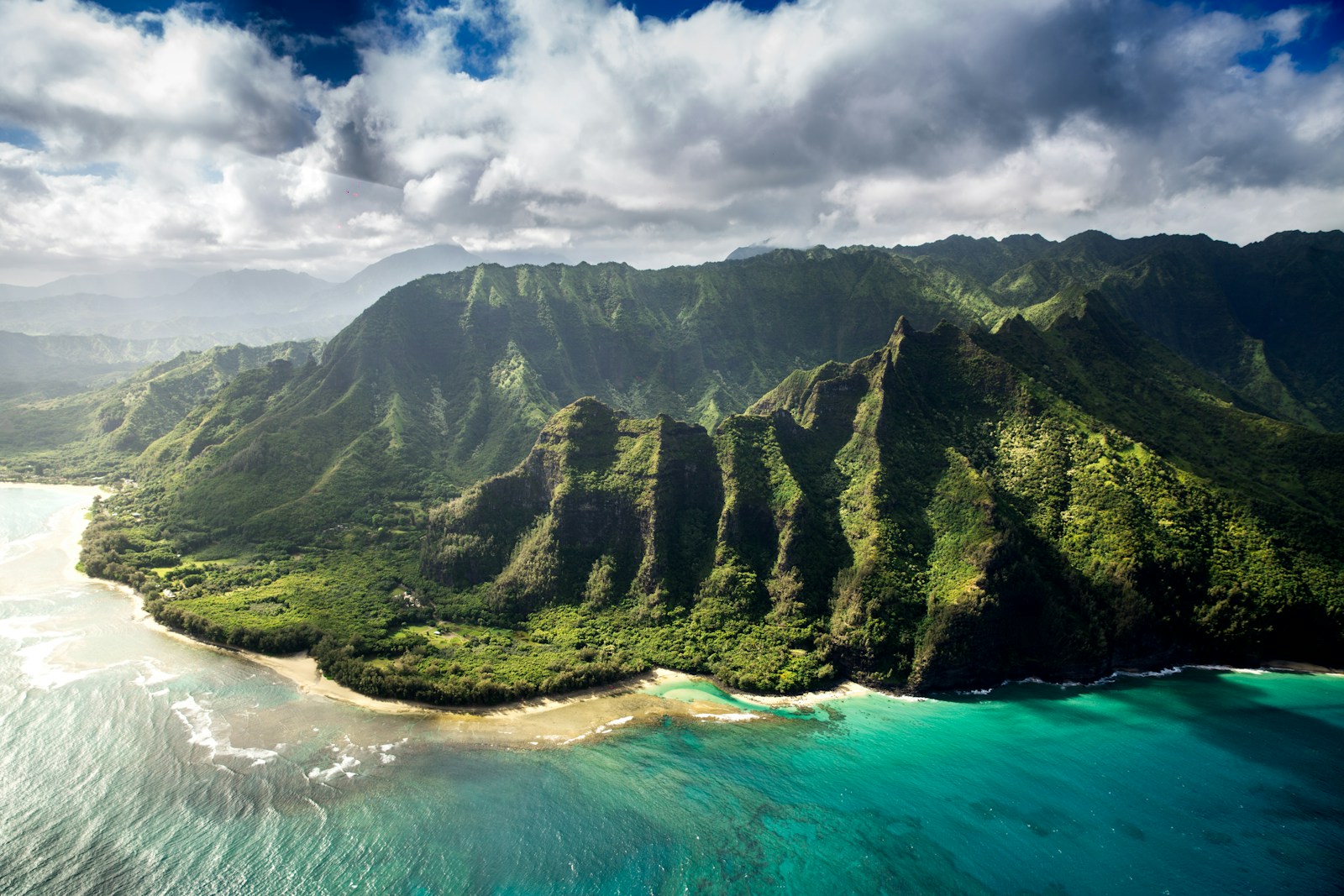
Kauai, the oldest and most dramatic island, is known as the Garden Isle for good reason — Na Pali Coast's 17-mile stretch of knife-edged sea cliffs can only be reached by boat, helicopter, or a challenging 11-mile hiking trail. The Waimea Canyon, often called the 'Grand Canyon of the Pacific,' cuts 14 miles through the island's interior. Oahu hosts Honolulu (Pearl Harbor, the USS Arizona Memorial, Waikiki Beach) and the North Shore, where Pipeline and Sunset Beach host the world's most famous big wave surfing every November–February.
Hawaii's natural diversity is extraordinary: the Big Island alone spans 11 of the world's 13 climate zones, from tropical rainforest to alpine desert. Humpback whales gather in Maui's channels December–April; manta rays congregate off the Big Island's Kona coast year-round. The best time to visit is April–October when weather is driest, but Hawaii's shoulder months offer pleasant conditions year-round.
Practical planning for Hawaii: the best time to visit is season-dependent, with a typical budget level of mid-range. Most travellers need three to five full days to cover the highlights without rushing — add extra time if you are combining Hawaii with nearby regions.
Priority experiences include local food, culture, and outdoor experiences. Do not miss the main sights and neighbourhoods.
Getting there: fly into the nearest major airport serving Hawaii and rent a car if you plan to visit national parks or small towns — many US states are car-dependent outside city centres. Book national park entry (where timed reservations apply) and popular trail permits as early as possible. Travel insurance covering rental car excess and medical care is recommended for domestic trips with adventure activities.
Where to stay: choose a base near your top priority — a gateway town for parks, a walkable downtown for cities, or a coastal hub for beach regions. Shoulder seasons around spring and fall usually offer better availability and lower lodging prices than peak summer or holiday weeks.
Tropical beach and reef enthusiasts, volcano and geology tourists, surfers targeting Oahu's North Shore in winter, honeymoon and luxury travellers, and anyone who wants to hike inside an active caldera.
Compare prices and book your trip — hotels, flights, and guided tours.
* Links open partner sites. We may earn a commission at no extra cost to you. See our editorial policy.