Northeast
🏖️ New Jersey
📍 Cape May & Jersey Shore · United States
📍 Cape May & Jersey Shore · United States
New Jersey hosts New York / New Jersey matches at the 2026 FIFA World Cup — June 11 to July 19, 2026.
View World Cup City Guide →🏛 Cape May Victorian District
New Jersey suffers from an image problem — it is the most densely populated state in America, adjacent to New York City, and the butt of a thousand jokes. But New Jersey's actual travel offering is considerably more compelling than its reputation suggests: 130 miles of Atlantic coastline, Victorian resort towns, Pine Barrens wilderness, and some of the East Coast's most distinguished dining all sit within an easy drive of each other.
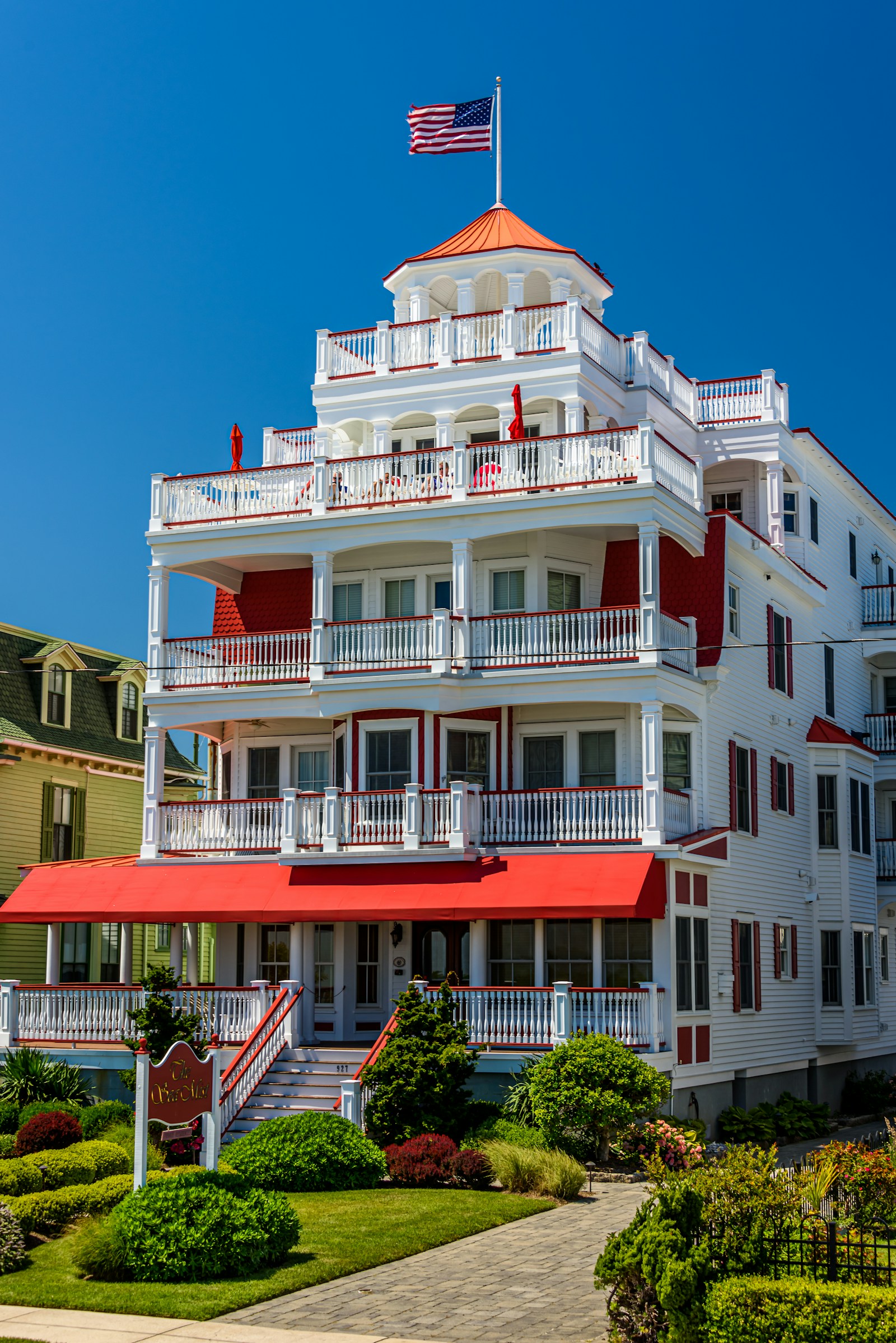
Cape May, at the southern tip of the state, is America's oldest seaside resort and one of its finest Victorian architectural preserves — the entire city is a National Historic Landmark, with 600+ historic buildings in a remarkably intact concentration of Queen Anne, Italianate, and Stick-style Victorian architecture. The beach is excellent (Cape May Point State Park has 3 miles of public beach), the whale and dolphin watching is among the best on the East Coast, and the restaurant scene has been recognized repeatedly by James Beard judges. The Cape May–Lewes Ferry connects directly to Delaware, making it a convenient junction for Mid-Atlantic coastal itineraries.
The Jersey Shore boardwalk culture — Asbury Park, Wildwood, Ocean City, and the historic Seaside Heights — is quintessential American summer. Wildwood's Doo Wop architecture (1950s motels and diners preserved in their atomic-age vernacular), Asbury Park's music heritage (Bruce Springsteen's origin story, and now a vibrant arts and restaurant scene), and the general exuberance of the shore's boardwalk concession culture are all genuinely distinctive American experiences. Long Beach Island and Island Beach State Park offer quieter Atlantic alternatives without boardwalk development.
The Pine Barrens, covering 1.1 million acres of southern New Jersey, is one of the East Coast's most unexpected wilderness areas — a vast expanse of pitch pine and Atlantic white cedar forest over a pristine aquifer, designated a UNESCO Biosphere Reserve and a National Reserve. Canoeing the slow-moving cedar-stained Mullica and Wading Rivers, looking for carnivorous plants in the bogs and the legendary Jersey Devil in the pines, is one of the region's most atmospheric adventures. New Jersey Transit makes the state accessible for day trips from New York City.
Practical planning for New Jersey: the best time to visit is season-dependent, with a typical budget level of mid-range. Most travellers need three to five full days to cover the highlights without rushing — add extra time if you are combining New Jersey with nearby regions.
Priority experiences include local food, culture, and outdoor experiences. Do not miss the main sights and neighbourhoods.
Getting there: fly into the nearest major airport serving New Jersey and rent a car if you plan to visit national parks or small towns — many US states are car-dependent outside city centres. Book national park entry (where timed reservations apply) and popular trail permits as early as possible. Travel insurance covering rental car excess and medical care is recommended for domestic trips with adventure activities.
Where to stay: choose a base near your top priority — a gateway town for parks, a walkable downtown for cities, or a coastal hub for beach regions. Shoulder seasons around spring and fall usually offer better availability and lower lodging prices than peak summer or holiday weeks.
Summer beach-goers who want classic American boardwalk culture, Cape May's Victorian resort character, and hikers or paddlers who want East Coast wilderness surprisingly close to New York.
Compare prices and book your trip — hotels, flights, and guided tours.
* Links open partner sites. We may earn a commission at no extra cost to you. See our editorial policy.