Southeast
🛣️ North Carolina
📍 Blue Ridge Parkway · United States
📍 Blue Ridge Parkway · United States
🏛 Blue Ridge Parkway
North Carolina spans the full range of American geography in a single state — from the Outer Banks' remote Atlantic barrier islands in the east, across the vast Piedmont plateau, to the Blue Ridge Mountains and Great Smoky Mountain summits in the west. The variety of landscapes, combined with a thriving food and arts culture in cities like Asheville and Durham, makes North Carolina one of the South's most compelling and underrated travel destinations.
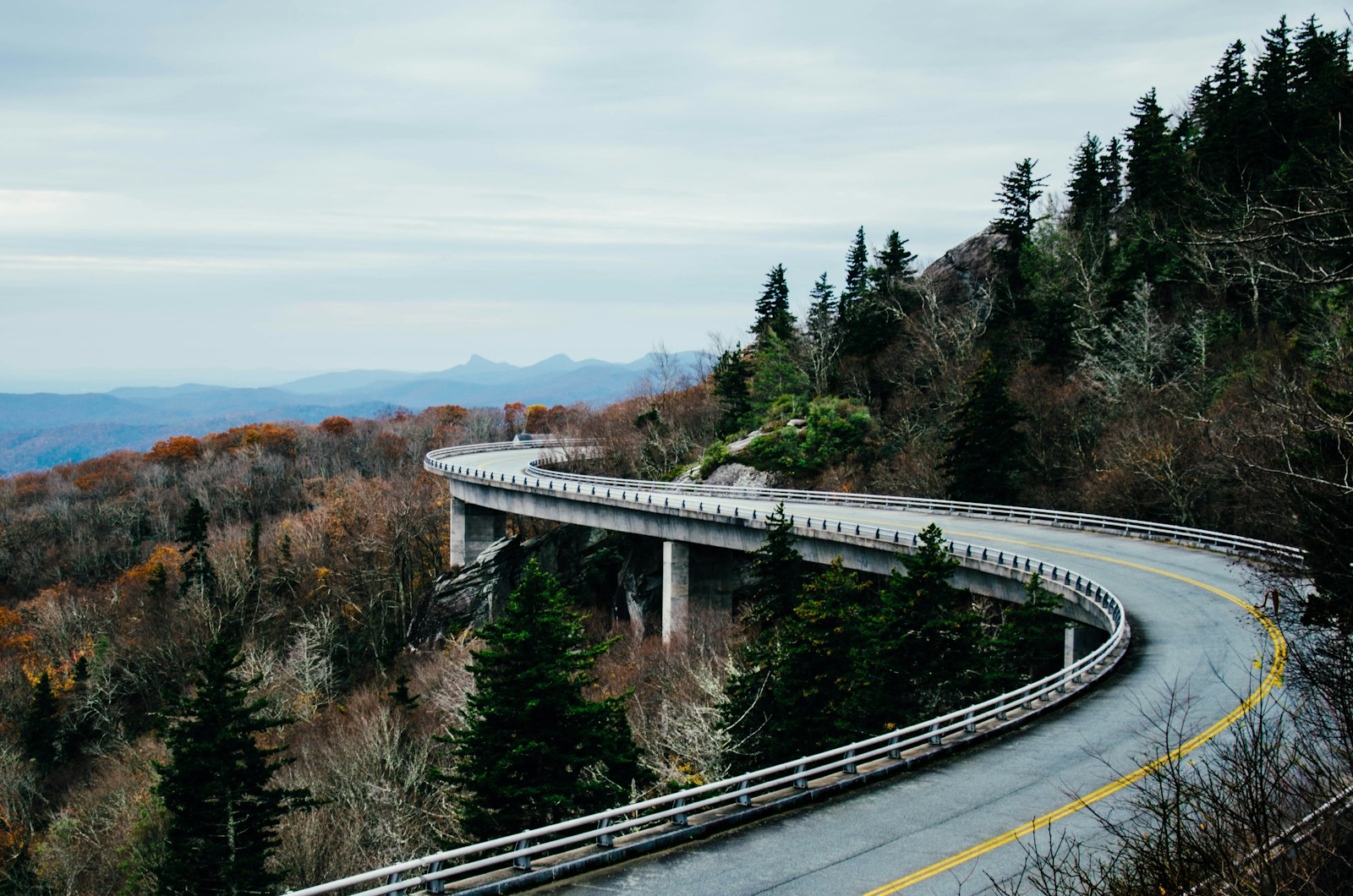
The Blue Ridge Parkway is America's most visited national park site — a 469-mile motor road (no commercial vehicles, no billboards) that follows the crest of the Blue Ridge and Black Mountains from the Shenandoah Valley in Virginia to the Great Smoky Mountains in North Carolina. The parkway is at its finest in October during fall foliage and in spring when flame azalea and mountain laurel bloom along the ridgelines. The section around Linville Falls, Grandfather Mountain, and the Linn Cove Viaduct (a remarkable engineering achievement, an S-curve bridge hugging the contours of Grandfather Mountain's rocky face) is the most spectacular. Asheville, at the parkway's southern end, is consistently voted one of America's best small cities — its food scene (ranked by Zagat, Bon Appétit, and Food & Wine as a top dining destination), thriving arts district, and walkable downtown make it a major draw for weekenders from Charlotte, Atlanta, and beyond. The Biltmore Estate — George Vanderbilt's 8,000-acre Gilded Age château, built in 1895, the largest private home in the United States — is Asheville's most visited attraction.
The Outer Banks form a remarkable 200-mile chain of barrier islands, separated from the mainland by shallow sounds, with some of the East Coast's most isolated and beautiful beaches. Wright Brothers National Memorial at Kill Devil Hills commemorates the December 17, 1903 first powered flight. Cape Hatteras National Seashore, the first national seashore in the US (established 1953), protects 70 miles of wild beach accessible by 4WD on its remote sections. The wild horses of Corolla and Ocracoke — feral descendants of Spanish mustangs shipwrecked in the 16th century — roam the northern Outer Banks' 4WD-only beaches.
The Research Triangle (Raleigh, Durham, Chapel Hill) has emerged as one of America's most dynamic tech and university hubs. Durham's reinvented American Tobacco Campus, the North Carolina Museum of Art (with an extraordinary outdoor amphitheater), and the food scene anchored by James Beard nominees make the Triangle one of the South's most exciting urban destinations.
Blue Ridge road-trippers, foodies targeting Asheville's nationally recognised restaurant scene, Outer Banks beach purists, and hikers using the Smokies as a base.
Compare prices and book your trip — hotels, flights, and guided tours.
* Links open partner sites. We may earn a commission at no extra cost to you. See our editorial policy.