There are beautiful places, and then there is Bora Bora. A volcanic peak rising from a turquoise lagoon in the middle of the South Pacific — this is what the world looks like when it's showing off.
You've seen the photograph. The overwater bungalow on stilts above water so impossibly turquoise it looks edited. The volcanic peak rising behind it. The sky a shade of blue that doesn't exist in ordinary life. You've seen it so many times it almost stopped meaning anything. And then you arrive in Bora Bora, and you realise the photographs don't come close.
The Lagoon Will Undo You
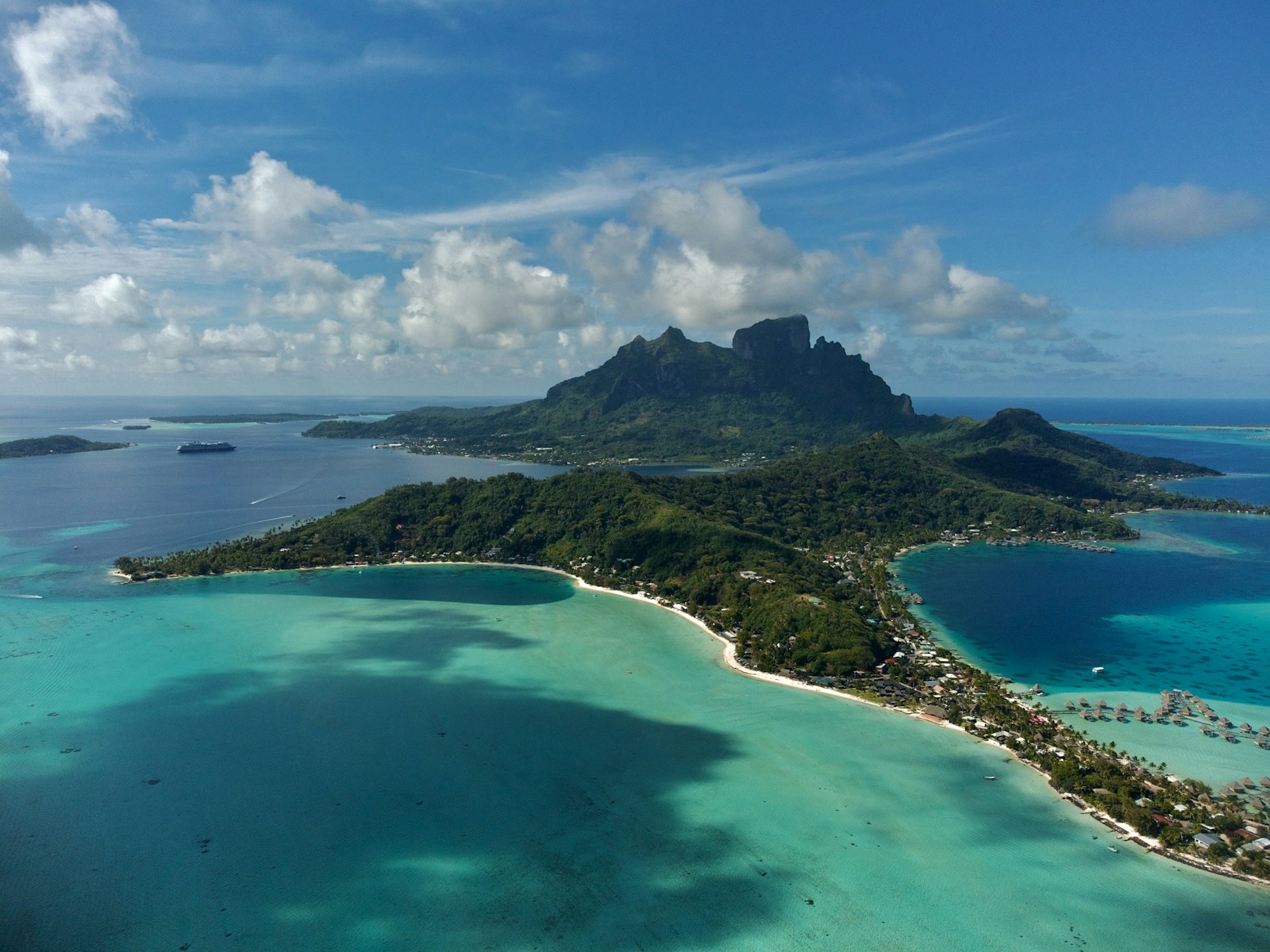
Bora Bora's lagoon is enclosed by a barrier reef that creates a protected body of water roughly 40 kilometres in circumference. The reef gradients shift the colour of the water from pale jade to electric turquoise to deep cobalt as the depth changes — a natural ombre that no photographer has ever fully captured because no camera sensor registers what the human eye does when it's standing there in the actual light.
Snorkelling in the lagoon means swimming alongside blacktip reef sharks and stingrays that are so used to human presence they simply circle around you. Not at a careful distance. Arm's reach. The stingrays glide past your legs like enormous, gentle birds. The sharks cruise the sandy bottom without a flicker of interest in you. It is one of the most unexpectedly peaceful wildlife experiences on earth.
The Overwater Bungalow Was Invented Here
The overwater bungalow — now the defining image of luxury travel from the Maldives to the Caribbean — was created here, at the original Bora Bora Hotel, in 1967. The concept was simple: build a room on stilts above the water so you can step off your deck directly into the lagoon. Sixty years later, the luxury resorts have turned that idea into something extraordinary — glass floors to watch fish below your feet, outdoor rain showers open to the lagoon and sky, private decks where the water is so clear you can see the reef from your sunlounger.
The Four Seasons, St. Regis, and Conrad are the properties most people aspire to. They are genuinely as good as their reputation. They are also $1,500–3,000 per night. If that's your budget, book it — you won't regret it. If it isn't, read on.
You Don't Need a Luxury Resort to Feel It
Here's what most Bora Bora content won't tell you: almost everything that makes the island extraordinary is free. The lagoon is the lagoon whether you sleep above it in a $2,000 bungalow or on the main island in a pension guesthouse for $120 a night. The light hitting Mount Otemanu at dawn doesn't cost anything. The sharks don't check your room rate before swimming past you.
Staying in a pension on the main island — Rohotu, Sunset Hill, Le Maitai — and hiring a local lagoon tour operator for the snorkelling and shark feeding costs a fraction of the resort price and delivers nearly identical natural experiences. The overwater bungalow is extraordinary, but it's the lagoon that stays with you.
Mount Otemanu at Sunrise
The volcanic peak at the centre of the island rises 727 metres from sea level. At sunrise, when the mist is still on the water and the first light catches the summit, it is one of the most quietly beautiful things in the Pacific. You can hike toward the peak — the jungle interior is dense and the trail is steep — or simply watch it from the water as you paddle a kayak across the lagoon in the early morning before the day-tripper boats arrive.
The contrast of the jagged volcanic interior against the flat, glittering lagoon is what makes Bora Bora visually different from the Maldives or the Seychelles. It's not just an atoll. It has drama and scale that no photograph properly conveys.
When to Go — and When to Stay Away
The dry season runs May through October — lower humidity, excellent visibility in the water, and consistent sunshine. This is peak season and prices reflect it. November through April is warmer and wetter; the lagoon is still beautiful, rain comes in short bursts rather than all-day downpours, and resort rates drop significantly.
July and August are the most crowded months. If you're going for a honeymoon or anniversary and want the island to feel quiet and intimate, consider May, June, or September — you get the best weather without the full peak-season crowds.
Getting There
All international flights connect through Papeete (Tahiti) — there are no direct long-haul flights to Bora Bora itself. From Papeete, Air Tahiti operates 45-minute propeller flights to Bora Bora's airport on a small motu. The journey from Los Angeles to the island takes roughly 10–12 hours total including the connection.
The transfer from the airport to your resort or pension is by boat — another small miracle. Most resorts send a motorised outrigger canoe to collect guests from the dock. Arriving at your overwater bungalow by boat, as the lagoon opens up around you in every direction, is the kind of arrival you remember for the rest of your life.
What a Week Actually Costs
- Flights (from LA, return): $1,200–1,800
- Pension guesthouse (7 nights): $800–1,200
- Entry-level overwater bungalow (7 nights): $5,000–8,000
- Lagoon tours and snorkelling: $80–150/day
- Food (local restaurants vs resort): $60–80/day vs $200+/day
- Budget trip total: ~$3,500–5,000
- Luxury trip total: ~$12,000–20,000+