beach
🏝️ Maldives
📍 Maldives · Asia
📍 Maldives · Asia
🏛 Overwater Bungalows & Coral Reefs
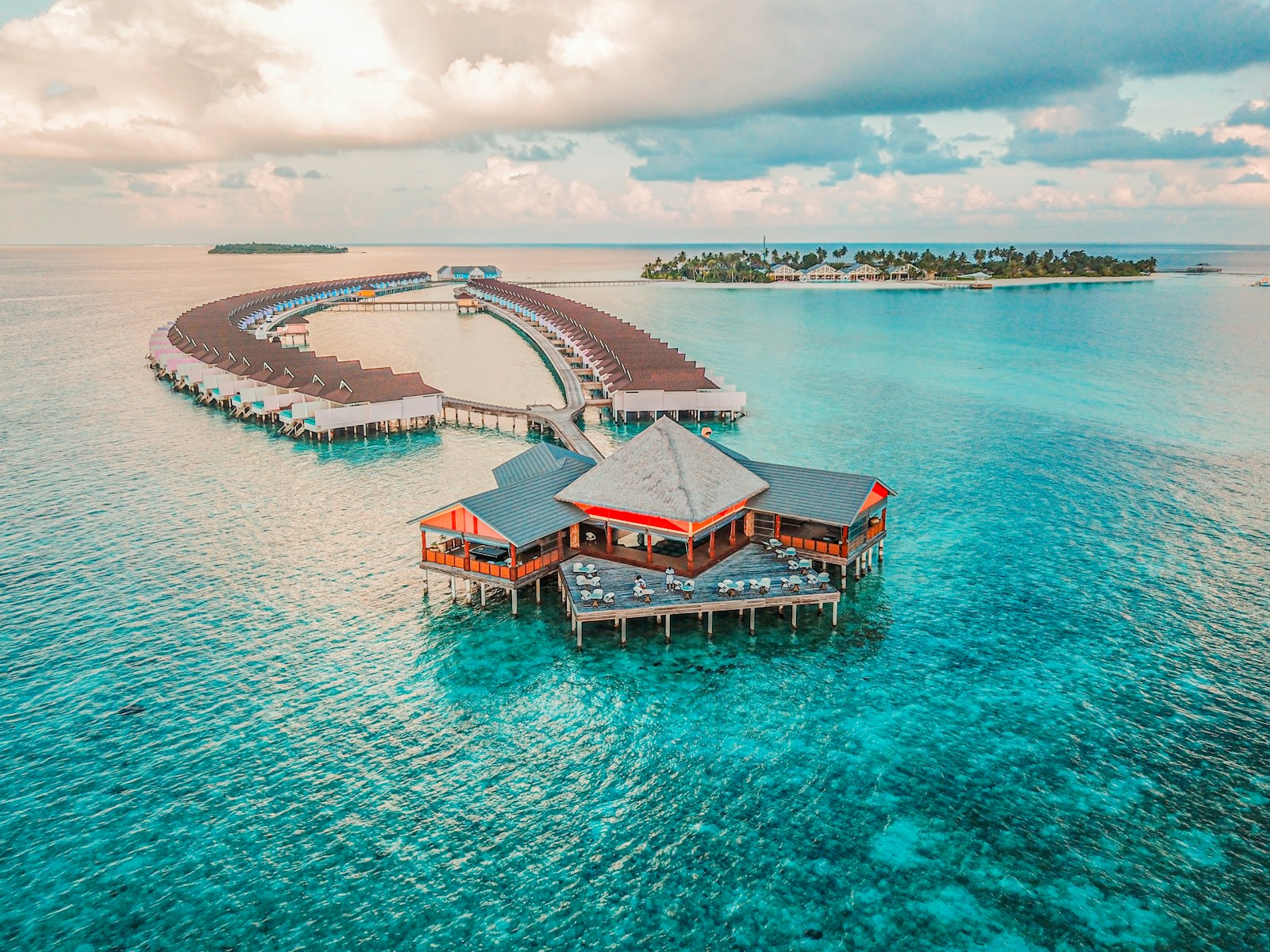
The Maldives is an archipelago of 1,192 coral islands spread across the Indian Ocean, straddling the equator southwest of India. The islands sit on 26 natural atolls — ring-shaped coral reefs encircling tranquil turquoise lagoons — and the entire country sits at an average elevation of just 1.5 metres above sea level, making it the world's lowest-lying nation. That geological fragility gives each visit a poignant urgency: the Maldives faces an existential threat from rising sea levels, and many of the coral reefs that underpin its extraordinary marine biodiversity are under pressure from ocean warming.
What the Maldives does supremely well is luxury. The overwater villa concept — bungalows built on stilts directly above the lagoon, with glass-floor panels looking into the water below and private decks for direct ocean access — was essentially invented here and has been perfected over decades of competition between resort islands. Each resort occupies its own private island; some offer fewer than twenty villas. Butler service, underwater restaurants, and spa pavilions suspended over the water are standard at the upper tier. For those on tighter budgets, the local island guesthouses on Maafushi and Thulusdhoo offer access to the Maldives' lagoons and reefs at a fraction of resort prices.
The marine life is the real draw. The Maldives hosts over 1,100 species of fish and 21 species of whales and dolphins. Baa Atoll Biosphere Reserve is the world's most reliable location to swim with manta rays — the mantas gather in huge numbers during the summer months. Whale shark aggregations off South Ari Atoll bring the world's largest fish to snorkellers in shallow water. The coral reefs, despite bleaching events, remain among the richest in the Indian Ocean, with healthy hard coral gardens supporting extraordinary biodiversity.
The best time to visit is November through April — the dry northeast monsoon season, when the weather is at its most settled and the water clarity is exceptional. The southwest monsoon (May–October) brings more cloud, occasional storms, and rougher seas, but also the manta and whale shark aggregations that make summer visits worthwhile. Seaplanes and speedboats connect Male's international airport to the resort islands; the seaplane journey — 20–40 minutes above an impossibly turquoise atoll system — is a highlight in itself.
Practical planning for Maldives: the best time to visit is season-dependent, with a typical budget level of mid-range. Most travellers need three to five full days to cover the highlights without rushing — add extra time if you are combining Maldives with nearby regions.
Priority experiences include local food, culture, and outdoor experiences. Do not miss the main sights and neighbourhoods.
Before you book, verify entry requirements for Maldives — visa rules, passport validity, and any health documentation change frequently. Travel insurance with medical evacuation cover is worthwhile for international trips.
Where to stay: pick a walkable neighbourhood close to your main interests rather than the cheapest option far from the centre — transport costs and lost time often erase the savings. Book popular restaurants, guided tours, and peak-season accommodation early for high season dates.
Seaplane transfers to remote resorts are priced per person and add significantly to trip cost — confirm transfer fees before booking. Local island guesthouses on Maafushi or Thulusdhoo offer reef access at a fraction of resort rates.
Honeymooners, serious divers, and anyone who's been saving for a once-in-a-decade trip.
Compare prices and book your trip — hotels, flights, and guided tours.
* Links open partner sites. We may earn a commission at no extra cost to you. See our editorial policy.