adventure
🏔️ Kathmandu & Everest
📍 Nepal · Asia
📍 Nepal · Asia
🏛 Everest Base Camp Trek
Nepal is the trekking capital of the world, and the superlative is earned without contest. The country sits on the collision zone of the Indian and Eurasian tectonic plates — a geological impact so enormous that it pushed up eight of the world's ten highest mountains, including Everest at 8,849 metres. The Himalayan range forms the entire northern border, and the combination of extreme altitude, deep river valleys, rhododendron forests, and ancient Buddhist culture creates one of earth's most extraordinary landscapes.
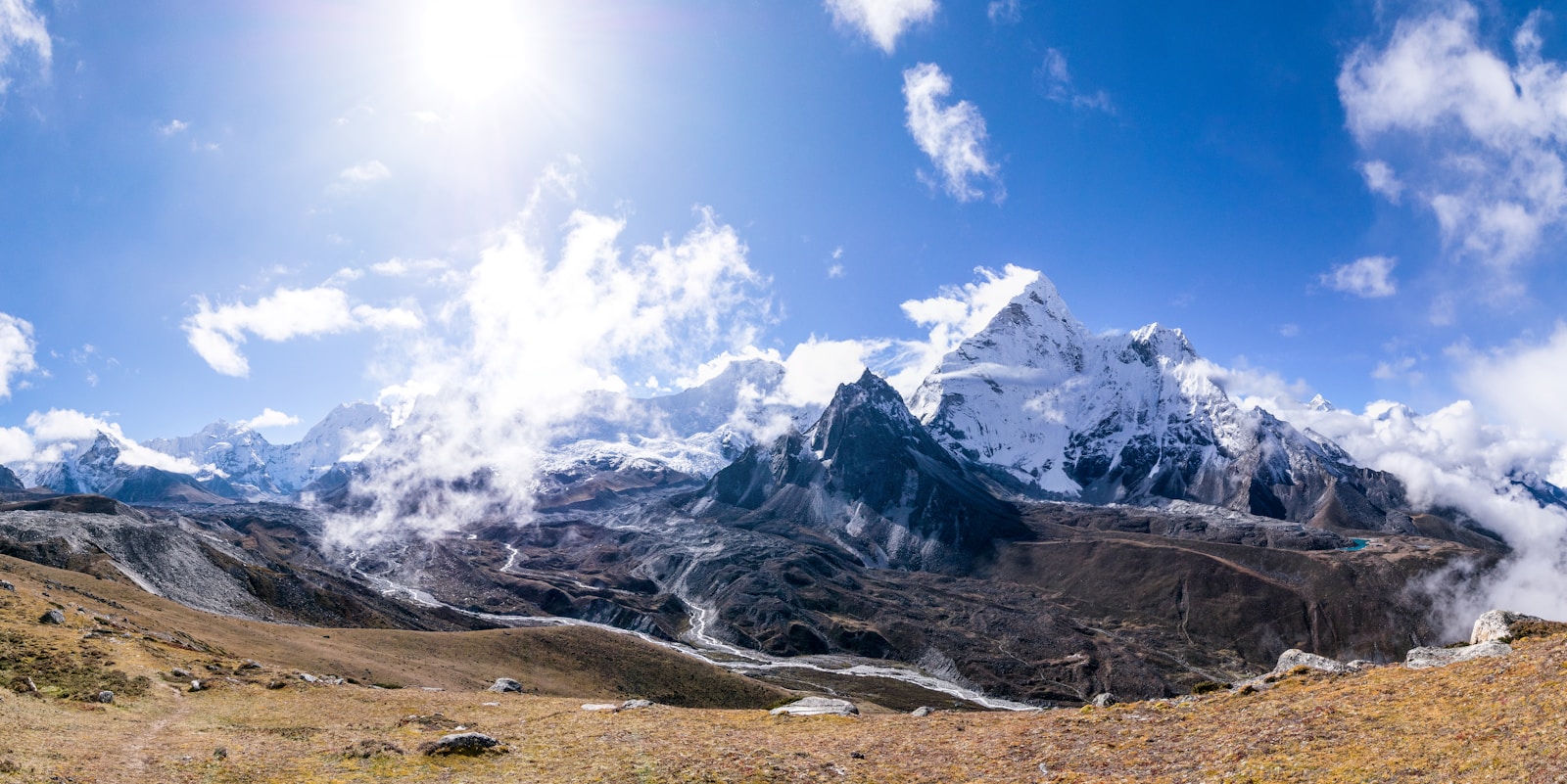
The Everest Base Camp trek is the world's most celebrated mountain walk — a 12–16 day round trip from Lukla airport to the base of the world's highest mountain at 5,364 metres. The path passes through Namche Bazaar (the Sherpa capital), Tengboche Monastery, Dingboche, and Lobuche, each offering a different perspective on high-altitude Himalayan life. The scenery throughout is overwhelming: glaciated peaks, suspension bridges over gorges, mani stones and prayer flags, and the extraordinary pyramid of Ama Dablam standing sentinel over the valley. Acclimatization days are essential — rushing this trek is dangerous. The views from Kala Patthar (5,545m), the actual high point of the classic trek, offer a more complete panorama of Everest and the Khumbu Glacier than base camp itself.
The Annapurna Circuit is Nepal's other great trek — a 12–21 day circumnavigation of the Annapurna massif, crossing the Thorong La Pass at 5,416 metres and descending through the deep Kali Gandaki Gorge. The Annapurna Base Camp trek (7–10 days) is a more accessible alternative with spectacular views of Annapurna I, Machapuchare (the Fishtail), and the surrounding amphitheater.
Kathmandu, Nepal's chaotic and endlessly fascinating capital, holds seven UNESCO World Heritage sites within its valley: Pashupatinath Temple (the sacred Hindu cremation site on the Bagmati River), Boudhanath Stupa (one of the world's largest), Swayambhunath (the Monkey Temple), and the Durbar Squares of Kathmandu, Bhaktapur, and Patan. Pokhara, the gateway to the Annapurna region, offers a serene lakeside alternative to the capital's frenzy. The best trekking seasons are October–November (post-monsoon clarity) and March–May (spring rhododendron bloom).
Practical planning for Kathmandu & Everest: the best time to visit is season-dependent, with a typical budget level of mid-range. Most travellers need three to five full days to cover the highlights without rushing — add extra time if you are combining Kathmandu & Everest with nearby regions.
Priority experiences include local food, culture, and outdoor experiences. Do not miss the main sights and neighbourhoods.
Before you book, verify entry requirements for Nepal — visa rules, passport validity, and any health documentation change frequently. Travel insurance with medical evacuation cover is worthwhile for international trips.
Where to stay: pick a walkable neighbourhood close to your main interests rather than the cheapest option far from the centre — transport costs and lost time often erase the savings. Book popular restaurants, guided tours, and peak-season accommodation early for high season dates.
Serious trekkers, adventure seekers, and anyone with 14+ days and genuine interest in Himalayan culture — not just the summit view.
Compare prices and book your trip — hotels, flights, and guided tours.
* Links open partner sites. We may earn a commission at no extra cost to you. See our editorial policy.