adventure
⛰️ Banff
📍 Canada · North America
📍 Canada · North America
🏛 Lake Louise
Banff National Park occupies 6,641 square kilometres of the Canadian Rockies in Alberta, established in 1885 as Canada's first national park after railway workers discovered natural hot springs beneath Castle Mountain. The landscape is an almost absurd concentration of geological drama — jagged limestone peaks thrust upward from U-shaped glacial valleys, turquoise rivers carry glacial silt to lakes of impossible colour, and ancient icefields feed glaciers that are still retreating each decade. The town of Banff itself sits at 1,400 metres in the Bow Valley, surrounded by mountains on all sides, with the iconic Fairmont Banff Springs Hotel perched above it like a Scottish baronial castle transplanted to the Rockies.
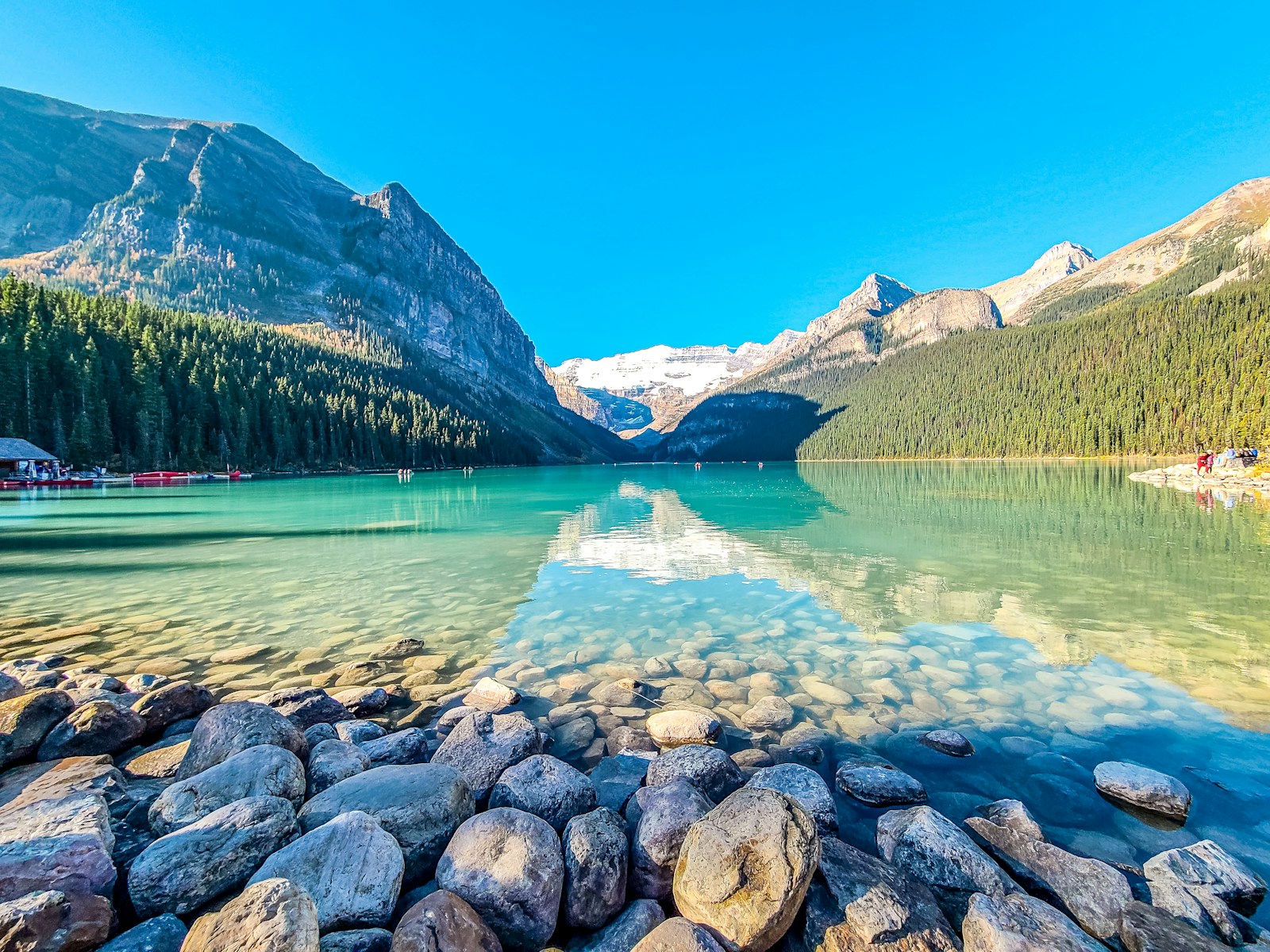
The lakes of Banff are the park's most photographed features, and no photograph fully captures their reality. Lake Louise is the most famous — a kilometre-long expanse of turquoise water backed by the Victoria Glacier and framed by the grand Chateau Lake Louise. The colour comes from rock flour, fine particles of stone ground by glaciers that remain in suspension and refract blue and green light. Moraine Lake, reachable by a short drive up the Valley of the Ten Peaks road, sits in a cirque of ten mountains above 3,000 metres and offers what many consider the most beautiful view in Canada. Peyto Lake, accessible from the Icefields Parkway, shows a fox-head-shaped expanse of vivid cyan spread across a broad mountain valley.
The Icefields Parkway connecting Banff to Jasper is widely regarded as one of the world's great drives — 232 kilometres of two-lane highway passing glaciers, waterfalls, and mountains with scarcely a building in sight. The Columbia Icefield, the largest sub-polar ice mass in North America, sits astride the continental divide and sends meltwater to three oceans. The Athabasca Glacier descends from the icefield's edge and can be walked upon with a guide — a powerful encounter with ice that fell as snow up to 400 years ago. Wildlife is abundant throughout the park: elk graze in Banff townsite meadows, black and grizzly bears forage in berry patches, and wolves occasionally trot along roadsides at dawn.
Banff's ski season runs from November to May, with three ski areas — Sunshine Village, Mount Norquay, and Lake Louise Ski Resort — offering combined terrain of over 8,000 acres. Summer brings equally world-class hiking, with trails ranging from easy lakeside strolls to multi-day backcountry routes across high passes. The hot springs that sparked the park's creation still operate at the upper hot springs above town, offering a thermal soak with mountain views. Banff draws nearly four million visitors annually and is best experienced in shoulder seasons — late September brings golden larches and near-empty trails, while May offers spring wildflowers and the first meltwater surges.
Outdoor adventurers, photographers, and families with children old enough for moderate hiking.
Compare prices and book your trip — hotels, flights, and guided tours.
* Links open partner sites. We may earn a commission at no extra cost to you. See our editorial policy.