adventure
🏛️ Angkor Wat
📍 Cambodia · Asia
📍 Cambodia · Asia
🏛 Angkor Wat Temple Complex
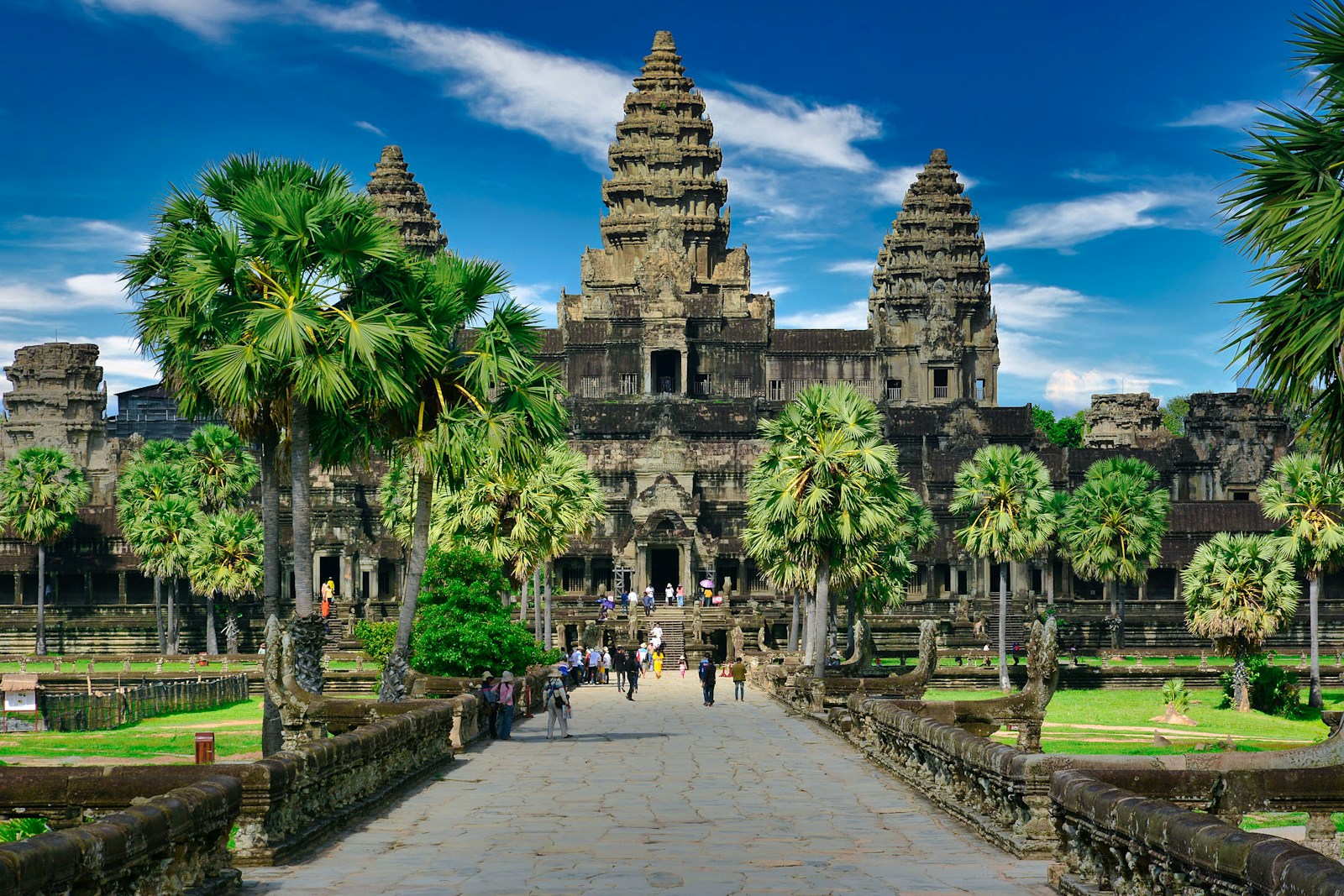
Angkor is the most extraordinary archaeological site in Southeast Asia and one of the most significant on earth — the remains of a series of capitals of the Khmer Empire that ruled much of mainland Southeast Asia from the 9th to the 15th centuries. At its height in the 12th century, Angkor was the largest pre-industrial city on earth, home to an estimated 750,000–1,000,000 people, fed by an elaborate hydraulic system of reservoirs, canals, and rice paddies that is only now being fully mapped by aerial LiDAR survey. What survives — thousands of temple structures in various states of preservation, spread across 400 square kilometres of Cambodian jungle — is a UNESCO World Heritage Site of staggering scale and beauty.
Angkor Wat, the complex's centrepiece, is the world's largest religious monument — a temple-mountain representing the Hindu cosmological universe, built between 1113 and 1150 under King Suryavarman II and covering 162.6 hectares within its moat. Its five towers, rising in graduated tiers to a central spire at 65 metres, are among the most recognisable architectural forms in the world. The sunrise view from the western causeway — Angkor Wat reflected in the reflecting pools, its towers silhouetted against a pink sky — is genuinely one of travel's great visual experiences. The 800-metre Gallery of Bas-Reliefs, covering the entire outer wall, depicts 1,200 square metres of carved narrative — scenes from Hindu mythology and historical battles of extraordinary detail and artistry.
Bayon Temple, the centrepiece of the later Angkor Thom city complex, is arguably more mysterious and atmospheric than Angkor Wat — its towers are carved with 216 enormous serene stone faces of the Bodhisattva Avalokiteshvara (believed to be portraits of King Jayavarman VII), watching in all directions from above the jungle canopy. Ta Prohm, the 'Tomb Raider' temple, has been deliberately left partially consumed by the jungle — the enormous strangler fig roots enveloping sandstone walls are a masterclass in dramatic preservation.
Siem Reap, the gateway town, has developed a strong restaurant and bar scene around the Pub Street area. The best strategy for visiting Angkor is a three-day temple pass — visiting Angkor Wat for sunrise on day one (arrive by 5am), exploring the inner Angkor Thom circuit on day two, and venturing to the outer temples (Preah Khan, Neak Pean, Ta Som) on day three. November–March is the best time to visit — cool, dry, and clear.
Practical planning for Angkor Wat: the best time to visit is season-dependent, with a typical budget level of mid-range. Most travellers need three to five full days to cover the highlights without rushing — add extra time if you are combining Angkor Wat with nearby regions.
Priority experiences include local food, culture, and outdoor experiences. Do not miss the main sights and neighbourhoods.
Before you book, verify entry requirements for Cambodia — visa rules, passport validity, and any health documentation change frequently. Travel insurance with medical evacuation cover is worthwhile for international trips.
Where to stay: pick a walkable neighbourhood close to your main interests rather than the cheapest option far from the centre — transport costs and lost time often erase the savings. Book popular restaurants, guided tours, and peak-season accommodation early for high season dates.
History lovers, photographers, and anyone who can give Cambodia 5+ days rather than treating Angkor as a day trip from Bangkok.
Compare prices and book your trip — hotels, flights, and guided tours.
* Links open partner sites. We may earn a commission at no extra cost to you. See our editorial policy.