adventure
🏔️ Bhutan
📍 Bhutan · Asia
📍 Bhutan · Asia
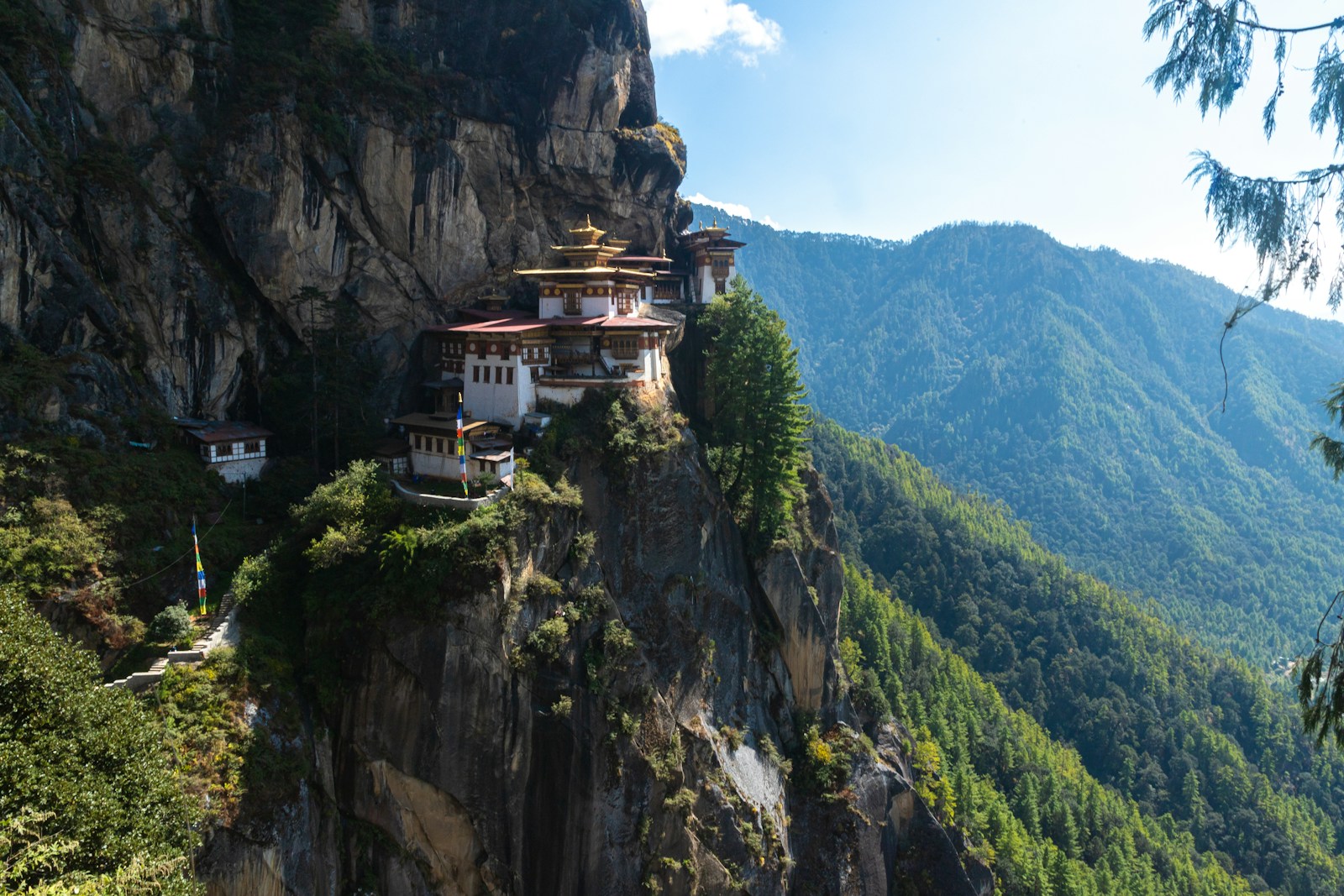
🏛 Paro Taktsang (Tiger's Nest)
Bhutan is one of the world's most exceptional travel destinations — a Himalayan Buddhist kingdom that has deliberately chosen a path of measured, high-value tourism, allowing only a limited number of visitors and requiring them to pay a Sustainable Development Fee (currently $100 per person per day in high season) in exchange for an experience of extraordinary authenticity. The country operates on the principle of Gross National Happiness — an official index that measures wellbeing, cultural preservation, environmental sustainability, and good governance alongside economic factors — and the result is a society that genuinely prioritises these values in ways visible to visitors.
Paro Taktsang — the Tiger's Nest Monastery — is one of Asia's most iconic and dramatic sacred sites. This 17th-century dzong complex clings to a sheer cliff face 900 metres above the Paro Valley floor, accessible by a 2–3 hour hike through pine forest. The views of the white-and-gold buildings against the rock face, framed by prayer flags and the green valley below, are among the most photographed in Asia. The monastery is active and sacred — visitors must dress modestly and remove shoes to enter. The hike there and back is the highlight of any Bhutan trip.
Bhutan's dzong architecture — massive fortress-monasteries built at strategic valley confluences — is among the most impressive vernacular architectural tradition in Asia. Punakha Dzong, at the confluence of the Pho Chhu and Mo Chhu rivers, is the most beautiful, particularly in spring when jacaranda trees bloom purple against the white walls. Tashichho Dzong in Thimphu is the seat of government and the throne room. The Black Mountains — a wilderness of temperate forest between Punakha and Trongsa — protect the country's remarkable biodiversity, including snow leopards, tigers, red pandas, and black-necked cranes.
Bhutan trekking — particularly the Snowman Trek (25 days, crossing multiple 5,000m+ passes), the Druk Path, and the Jomolhari Trek — ranks among Asia's finest high-altitude walking. Tours must be arranged through a licensed Bhutanese tour operator or an authorised international partner, which effectively ensures quality of experience and support throughout the trip. Visit March–May (spring rhododendron bloom) or October–November (clearest mountain views and major dzong festivals) for the finest conditions.
Practical planning for Bhutan: the best time to visit is season-dependent, with a typical budget level of mid-range. Most travellers need three to five full days to cover the highlights without rushing — add extra time if you are combining Bhutan with nearby regions.
Priority experiences include local food, culture, and outdoor experiences. Do not miss the main sights and neighbourhoods.
Before you book, verify entry requirements for Bhutan — visa rules, passport validity, and any health documentation change frequently. Travel insurance with medical evacuation cover is worthwhile for international trips.
Where to stay: pick a walkable neighbourhood close to your main interests rather than the cheapest option far from the centre — transport costs and lost time often erase the savings. Book popular restaurants, guided tours, and peak-season accommodation early for high season dates.
Compare prices and book your trip — hotels, flights, and guided tours.
* Links open partner sites. We may earn a commission at no extra cost to you. See our editorial policy.