culture
🏜️ Cairo & Pyramids
📍 Egypt · Africa
📍 Egypt · Africa
🏛 Great Pyramids of Giza
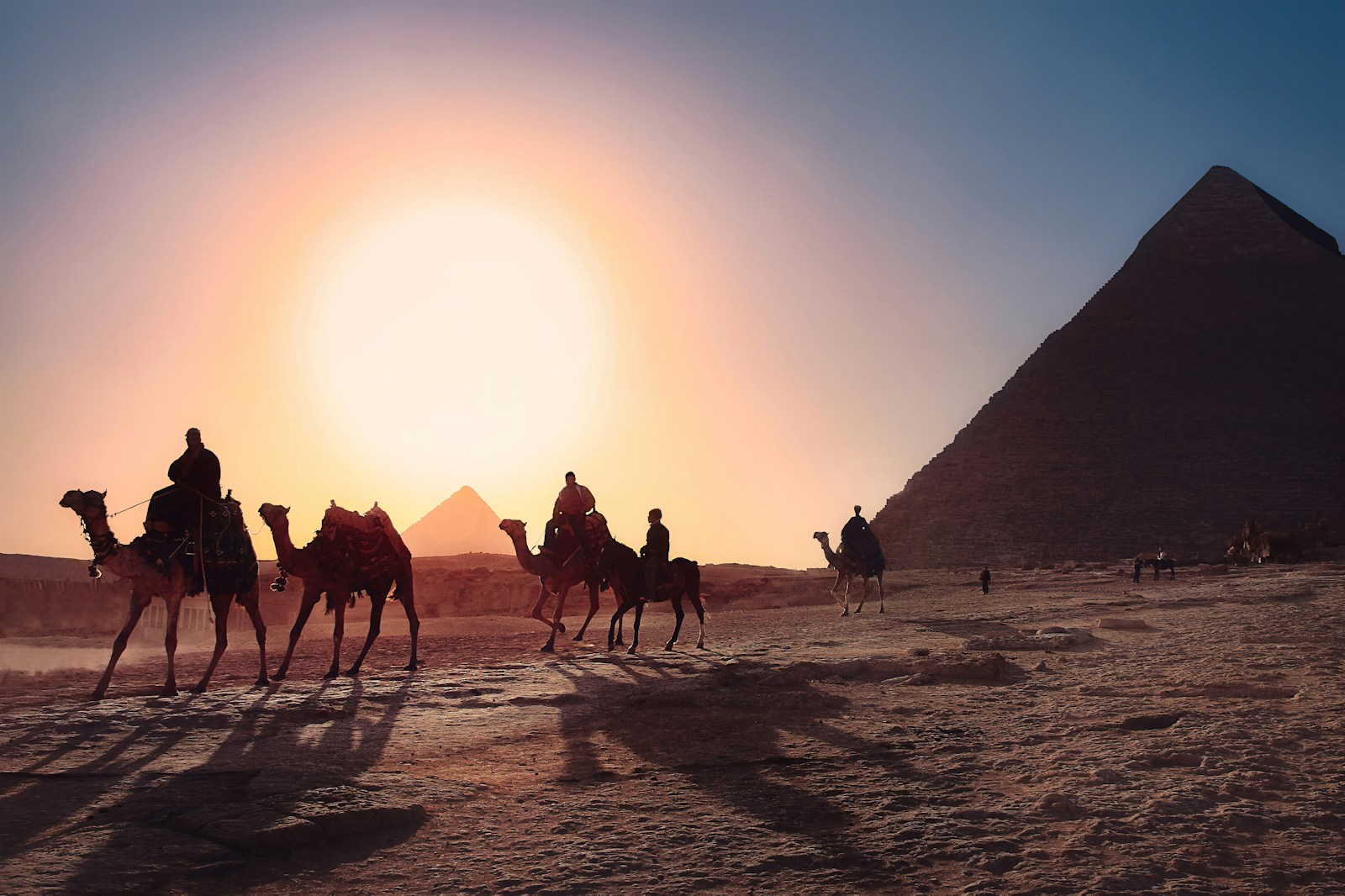
Cairo is one of the oldest continuously inhabited cities on Earth and home to the last surviving Wonder of the Ancient World. The Giza Plateau on the city's southwestern edge holds the Great Pyramid of Khufu — built in 2560 BCE with 2.3 million limestone blocks averaging 2.5 tonnes each — alongside the Pyramids of Khafre and Menkaure and the Great Sphinx. The scale is impossible to anticipate from photographs: standing at the base of the Great Pyramid, you understand immediately why ancient Greeks listed it as a wonder and moderns have not stopped marveling.
The Grand Egyptian Museum, which opened in phases from 2022 to 2024 near the Giza Plateau, is now the world's largest archaeological museum and houses the complete treasures of Tutankhamun — 5,000 artifacts including the golden death mask, chariot, and throne — displayed together for the first time since Howard Carter's 1922 discovery. Islamic Cairo, concentrated around Al-Muizz Street, contains a dense corridor of medieval mosques, madrassas, and bazaars dating from the Fatimid and Mamluk eras. Khan el-Khalili, the 14th-century bazaar, still sells perfume, papyrus, and spices from stone archways.
The city itself — sprawling home to 21 million people — rewards those who go beyond the monuments. The Zamalek neighborhood on Gezira Island has the best restaurants and the Cairo Opera House. Coptic Cairo, in the Old City near the Nile, holds some of Christianity's most ancient churches including the Hanging Church (4th century) and the Church of St. Sergius and Bacchus. A felucca (traditional sailboat) sunset on the Nile, departing from the Corniche, is one of the city's great pleasures.
Practical planning: Avoid May to September — heat reaches 40°C and humidity is oppressive. October to April is ideal. The Cairo Metro is clean, cheap, and surprisingly useful for reaching major sites. Uber is reliable for longer journeys. Eat at Koshary Abou Tarek for the definitive bowl of Egypt's national dish (rice, lentils, pasta, fried onion, tomato sauce). Dress modestly near mosques. Bargaining is expected; most tourist areas are genuinely safe in daylight hours.
Practical planning for Cairo & Pyramids: the best time to visit is season-dependent, with a typical budget level of mid-range. Most travellers need three to five full days to cover the highlights without rushing — add extra time if you are combining Cairo & Pyramids with nearby regions.
Priority experiences include local food, culture, and outdoor experiences. Do not miss the main sights and neighbourhoods.
Before you book, verify entry requirements for Egypt — visa rules, passport validity, and any health documentation change frequently. Travel insurance with medical evacuation cover is worthwhile for international trips.
Where to stay: pick a walkable neighbourhood close to your main interests rather than the cheapest option far from the centre — transport costs and lost time often erase the savings. Book popular restaurants, guided tours, and peak-season accommodation early for high season dates.
History obsessives, archaeology enthusiasts, and anyone who has ever wondered what it actually feels like to stand beside a structure built 4,500 years ago.
Compare prices and book your trip — hotels, flights, and guided tours.
* Links open partner sites. We may earn a commission at no extra cost to you. See our editorial policy.