culture
🎭 Salvador de Bahia
📍 Brazil · South America
📍 Brazil · South America
🏛 Pelourinho Historic Centre
Salvador da Bahia is the most African city in the Americas — a direct consequence of its role as the primary port of entry for enslaved Africans arriving in Brazil from 1549, when the city was founded as Brazil's first colonial capital, until 1831, when the transatlantic slave trade was officially (if not actually) abolished. Approximately 4 million Africans arrived in Salvador over three centuries — more than any other city in the Western Hemisphere — and the Yoruba, Fon, Ewe, and Bantu cultures they brought have survived in ways unique to Salvador: in the Candomblé religion (an African-derived spiritual tradition still practised in over 2,000 terreiros throughout the city), in the capoeira martial art, in the food, in the music, and in the physical appearance of a city where roughly 80% of the population identifies as Afro-Brazilian.
The Pelourinho — Salvador's UNESCO-listed historic centre — is one of Latin America's most dramatically photogenic urban spaces: a steep colonial hillside of brightly painted Portuguese Baroque churches and mansions in yellow, blue, and pink, connected by cobblestone stairs that spill out onto plazas where capoeira practitioners spar in circles to the sound of the berimbau (a single-string bow instrument). The Pelourinho's name literally means "pillory" — it was the site of the public flogging of enslaved people, and this history is present in the neighbourhood's dual identity as both tourist spectacle and living memorial. The Museu Afro-Brasileiro, in the former Faculty of Medicine building, holds the most important collection of Candomblé sacred objects and Afro-Brazilian art in existence.
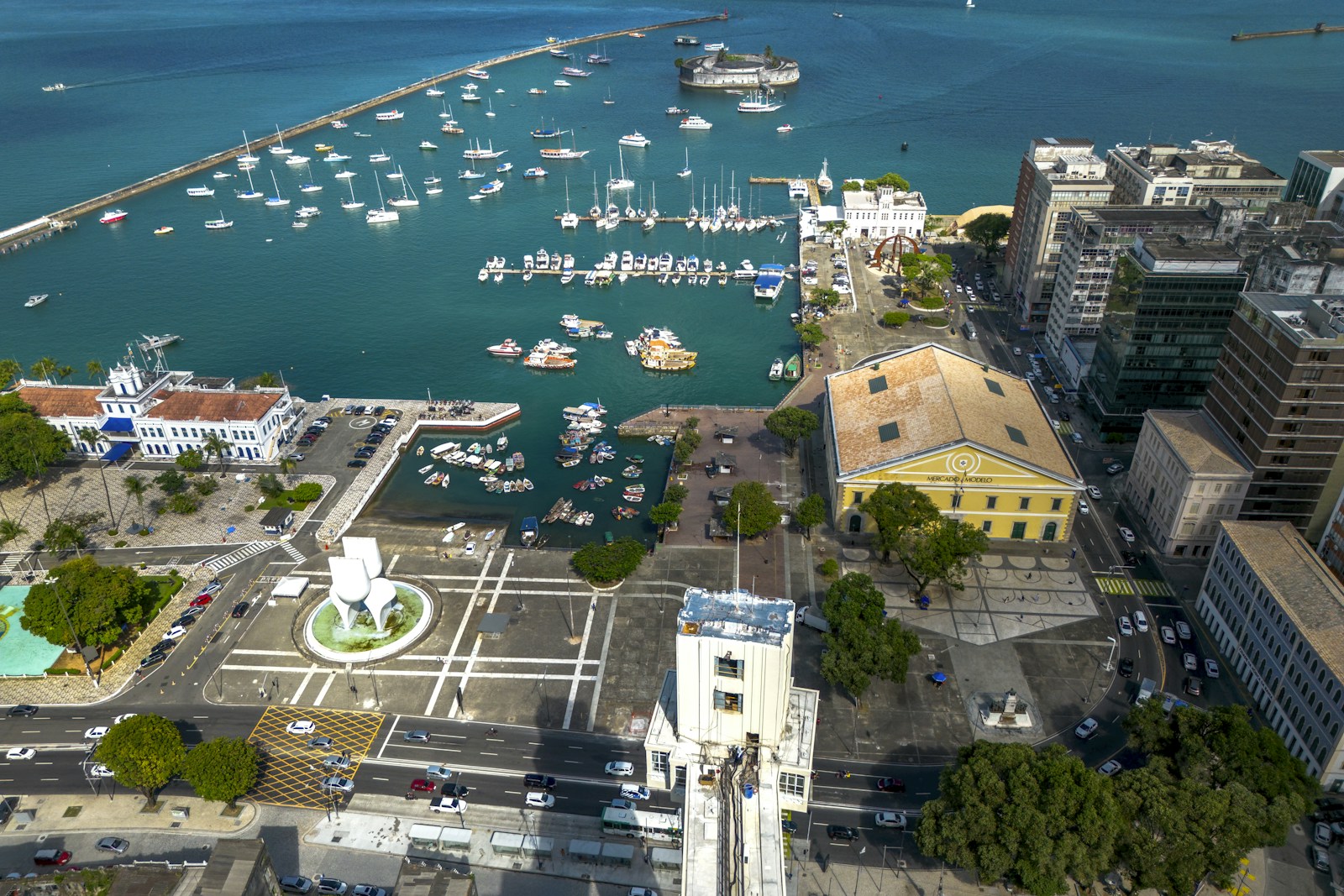
Salvador's food is among Brazil's most distinctive and most Africanized. Acarajé — deep-fried balls of black-eyed pea dough filled with dried shrimp, vatapá (spiced shrimp paste), and caruru (okra and cashew stew), sold from round clay pots by baianas dressed in white — is the city's defining street food and sacred in Candomblé tradition (acarajé is an offering to the orisha Iansã). Moqueca baiana — fish or shrimp slow-cooked in dende (palm) oil and coconut milk — is the regional stew that has influenced Brazilian restaurant menus worldwide. The Mercado Modelo waterfront market is the tourist version; for genuine food and atmosphere, the Mercado São Miguel in the lower city is more authentic.
Practical planning: Carnival in Salvador (February or March depending on the lunar calendar) is the world's largest street party by some measures — 15 days of blocos (street parades) with sound trucks (trios elétricos) rolling through packed streets. Book accommodation 6-12 months in advance for Carnival. The rest of the year the city is uncrowded by Brazilian standards. Security: the Pelourinho and Barra neighborhoods are generally safe during daylight; exercise caution at night and in unfamiliar areas. Best time June to October (cooler, drier, less humid).
Compare prices and book your trip — hotels, flights, and guided tours.
* Links open partner sites. We may earn a commission at no extra cost to you. See our editorial policy.