hidden
🗿 Easter Island
📍 Chile · South America
📍 Chile · South America
🏛 Moai Statues
Easter Island (Rapa Nui) is one of the most remote inhabited places on Earth — a triangular volcanic speck in the southeastern Pacific, 3,700 kilometres from mainland Chile and over 2,000 kilometres from the nearest inhabited island. Its isolation is part of the experience: the five-hour flight from Santiago crosses nothing but ocean, and arrival at Mataveri Airport — one of the world's most remote commercial airports — feels like landing on another planet. The island's 1,000 moai statues, carved by the Rapa Nui people between the 13th and 16th centuries, remain one of archaeology's greatest mysteries and one of travel's most emotionally resonant destinations.
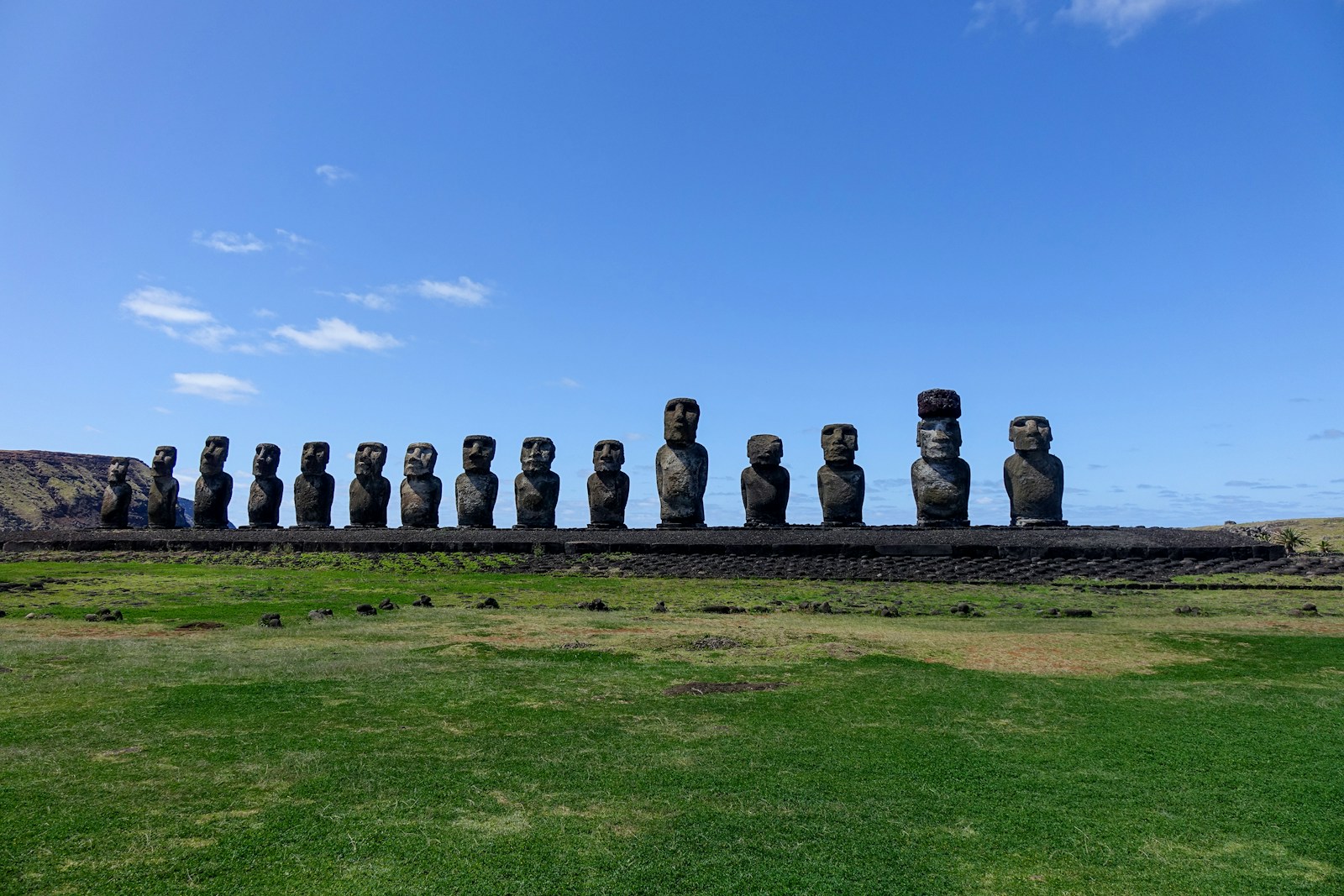
The moai are not museum pieces — they are living cultural objects in an active Polynesian society. Nearly 1,000 statues were carved at the Rano Raraku quarry from compressed volcanic tuff; hundreds remain in various stages of completion, half-buried in the hillside where work stopped abruptly during the island's ecological and social collapse in the 17th–18th centuries. Rano Raraku is the most haunting site on the island: walk among unfinished giants still attached to the rock face, their expressions serene and enigmatic. Ahu Tongariki, restored in the 1990s with 15 moai standing in a row against the Pacific sunrise, is the iconic image — arrive before 6am for the light and the silence before tour buses arrive.
Beyond the statues, the island's volcanic landscape is extraordinary. Rano Kau crater on the southwestern tip holds a freshwater lake within 300-metre cliffs; Orongo ceremonial village on its rim preserves stone houses and petroglyphs from the birdman cult that succeeded the moai era. Anakena beach on the north coast — white sand, coconut palms, moai on the shore — is the island's only real swimming beach and the legendary landing site of Hotu Matu'a, the founding ancestor. The diving and snorkelling are excellent: crystal-clear water, volcanic underwater formations, and occasional moai replicas placed on the seabed for divers.
Practical planning: a minimum of four nights, ideally a week — rushing the island in two days misses the atmosphere that makes it transformative. Rent a bicycle or scooter (distances are manageable; the coastal road is flat) rather than relying solely on organised tours. The Rapa Nui National Park ticket (required for all archaeological sites) is valid for 10 days. Tapati Rapa Nui festival in February is the island's greatest cultural event — body painting competitions, hakaupa races, and traditional ceremonies — but accommodation books months ahead. Respect the living culture: do not climb on moai platforms, ask before photographing local people, and understand that the Rapa Nui community has complex and sometimes conflicted feelings about tourism's impact on their land.
Anyone curious about one of history's great mysteries — not for those wanting beach resort infrastructure alongside the ruins.
Compare prices and book your trip — hotels, flights, and guided tours.
* Links open partner sites. We may earn a commission at no extra cost to you. See our editorial policy.