adventure
🟤 Uluru & Red Centre
📍 Australia · Oceania
📍 Australia · Oceania
🏛 Uluru (Ayers Rock)
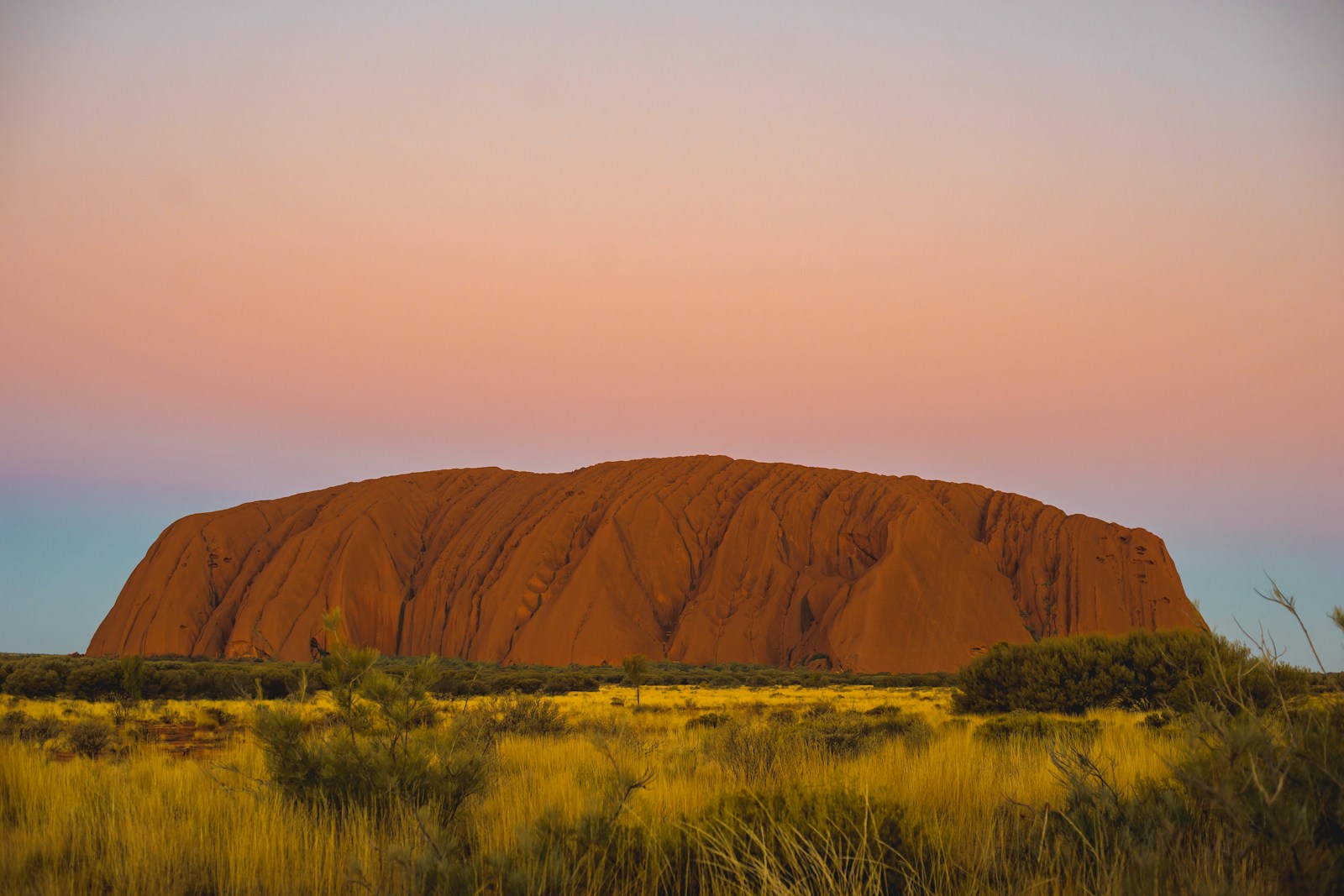
Uluru is Australia's most sacred and most recognisable natural landmark — a 348-metre-high, 9.4-kilometre-circumference sandstone inselberg rising from the flat red desert of central Australia with an abruptness that the human eye refuses to accept as natural. The rock's surface turns through orange and red to deep crimson and violet at sunset in a light show that changes every few minutes and has drawn visitors since European settlers first documented it in 1873. But Uluru's significance is not primarily visual: it is one of the most sacred sites in the Tjukurpa — the Anangu people's law and cosmology — and has been lived alongside and understood by the Anangu for at least 30,000 years. Climbing was permanently banned in 2019 at the request of the traditional owners; understanding why enriches every visit.
The 10.6-kilometre base walk circumnavigating Uluru reveals features invisible from the road: deep caves and overhangs with ancient ochre paintings, sacred sites where the rock's surface carries the marks of ancestral events in the Tjukurpa, permanent waterholes fed by rain running off the smooth rock face, and multiple distinct textures that make the rock appear entirely different from each compass direction. Guided cultural walks led by Anangu rangers provide stories the landscape holds. The Cultural Centre at the base explains the Tjukurpa through Anangu voices and is essential context before the walk.
Kata Tjuta (the Olgas) — 36 conglomerate domes rising up to 546m above the plain, 40km west of Uluru — are considered by many experienced visitors to be the superior experience. The Valley of the Winds walk (7.4km) passes through deep slots between the domes in morning light when the wind echoes between the rock faces; the Walpa Gorge walk (2.6km) enters a narrow canyon between two of the largest domes. The landscape at dawn, with no other people present and major Mitchell's cockatoos overhead, is one of Australia's most profound natural experiences.
Practical planning: The nearest town is Yulara (Ayers Rock Resort), 20km from Uluru — the only accommodation option for 450km. Fly from Sydney, Melbourne, or Alice Springs. Best time April to September (cooler, 20-25 degrees); October to March is brutal (38-42 degrees, flies constant). Sunrise and sunset are the mandatory viewing times. Stargazing tours operate year-round in one of Australia's best dark-sky zones. Book accommodation well ahead as the resort frequently sells out.
Practical planning for Uluru & Red Centre: the best time to visit is season-dependent, with a typical budget level of mid-range. Most travellers need three to five full days to cover the highlights without rushing — add extra time if you are combining Uluru & Red Centre with nearby regions.
Priority experiences include local food, culture, and outdoor experiences. Do not miss the main sights and neighbourhoods.
Before you book, verify entry requirements for Australia — visa rules, passport validity, and any health documentation change frequently. Travel insurance with medical evacuation cover is worthwhile for international trips.
Where to stay: pick a walkable neighbourhood close to your main interests rather than the cheapest option far from the centre — transport costs and lost time often erase the savings. Book popular restaurants, guided tours, and peak-season accommodation early for high season dates.
Anyone seeking to understand Australia's oldest culture in its most significant landscape, and travellers for whom meaningful encounters with Aboriginal history are a priority rather than an add-on.
Compare prices and book your trip — hotels, flights, and guided tours.
* Links open partner sites. We may earn a commission at no extra cost to you. See our editorial policy.