adventure
💧 Iguazú Falls
📍 Argentina/Brazil · South America
📍 Argentina/Brazil · South America
🏛 Iguazú Waterfalls
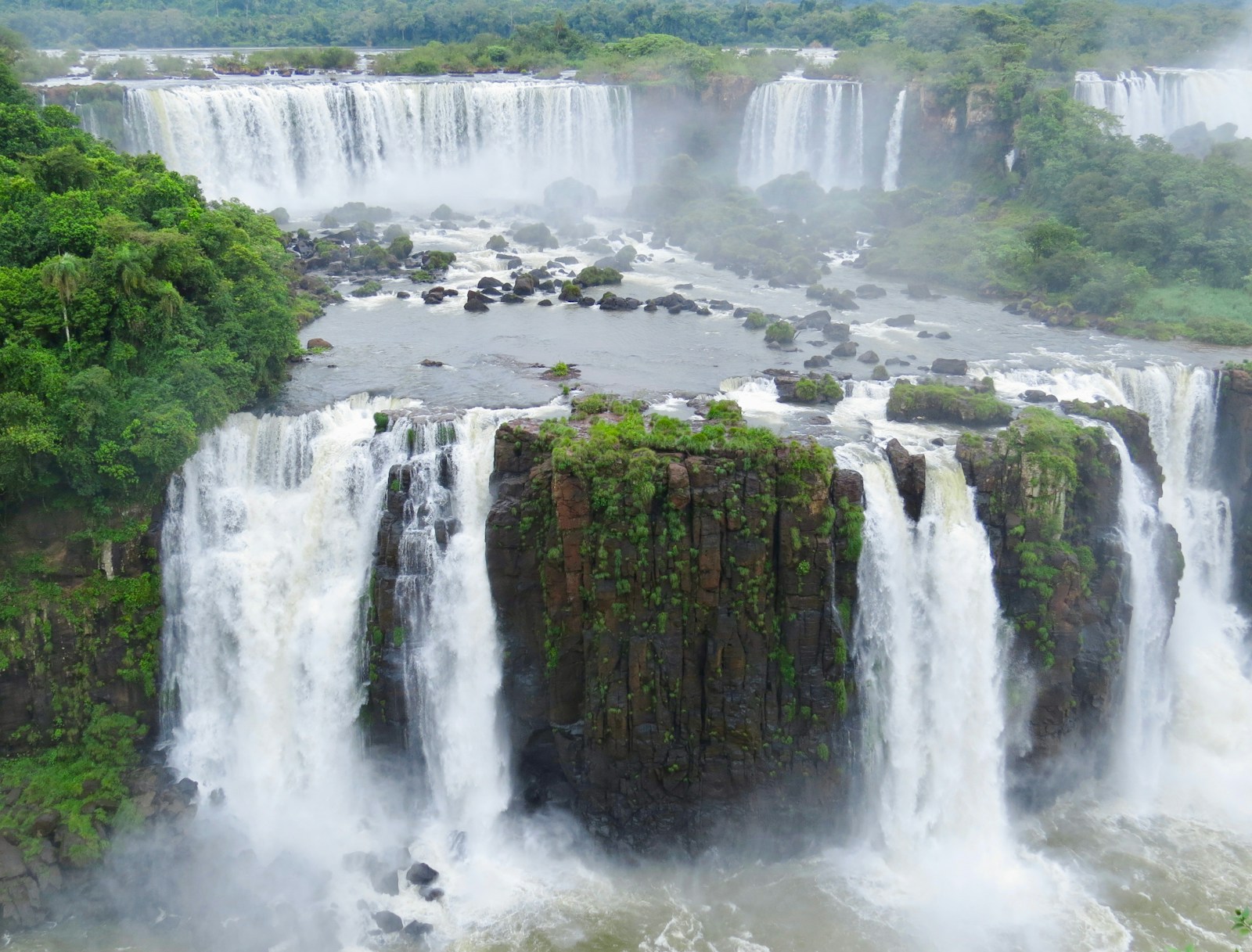
Iguazú Falls is the world's widest waterfall system — 275 individual cascades stretching 2.7 kilometres across the Iguazú River where it drops off the Paraná Plateau into a horseshoe canyon on the Argentina-Brazil border. At peak flow, 6,500 cubic metres of water per second pass over the falls; even Eleanor Roosevelt, a woman not known for effusive reactions, is reported to have said "Poor Niagara" upon first seeing them. The scale defeats photography: no single image can contain the full width of the falls, the height of the mist column, or the sound that fills the surrounding jungle with constant thunder.
Both Argentina and Brazil maintain national parks on their respective sides, with very different visitor experiences. The Argentine side (the larger park) offers an extraordinary network of walkways and bridges that put visitors directly above, beside, and below different sections of the falls — including the dramatic suspended walkway that approaches the Garganta del Diablo (Devil's Throat), the most powerful single cataract, from directly above. Walking the Upper and Lower Circuit takes a full day and soaks you with spray. The Brazilian side offers the classic panoramic view: a single elevated walkway at the edge of the canyon looking across the full width of the Argentine falls, delivering the most photographable perspective in under two hours.
The national park beyond the falls supports a remarkable biodiversity. Jaguars, tapirs, giant anteaters, and giant river otters inhabit the Argentine park's interior (rarely seen but real); coatis — masked, raccoon-like relatives — are everywhere and have been habituated to beg food from visitors. The bird life is extraordinary: toucans, great black hawks, purple-breasted cotingas, and the world's only swift that lives behind active waterfalls (the great dusky swift) nest in the mist-drenched cliff faces. Boat tours that drive directly under the falls are available from the Argentine side.
Practical planning: The Argentine side requires a minimum of a full day; staying overnight in Puerto Iguazú allows an early start before peak crowds at the Garganta del Diablo. The Brazilian side can be done in a half-day and is best in the morning light. A combined Argentina-Brazil visit requires a visa for some nationalities (check requirements for both countries); the international border crossing is straightforward. Best time August to November (lower water level, better visibility) or March-April (maximum flow). Avoid July and January (Argentine school holidays: very crowded).
Practical planning for Iguazú Falls: the best time to visit is season-dependent, with a typical budget level of mid-range. Most travellers need three to five full days to cover the highlights without rushing — add extra time if you are combining Iguazú Falls with nearby regions.
Priority experiences include local food, culture, and outdoor experiences. Do not miss the main sights and neighbourhoods.
Before you book, verify entry requirements for Argentina/Brazil — visa rules, passport validity, and any health documentation change frequently. Travel insurance with medical evacuation cover is worthwhile for international trips.
Where to stay: pick a walkable neighbourhood close to your main interests rather than the cheapest option far from the centre — transport costs and lost time often erase the savings. Book popular restaurants, guided tours, and peak-season accommodation early for high season dates.
Anyone who wants to see the world's most spectacular waterfall system — and there is nothing else like it on earth.
Compare prices and book your trip — hotels, flights, and guided tours.
* Links open partner sites. We may earn a commission at no extra cost to you. See our editorial policy.