adventure
⛰️ Mount Kilimanjaro
📍 Tanzania · Africa
📍 Tanzania · Africa
🏛 Uhuru Peak Summit (5,895m)
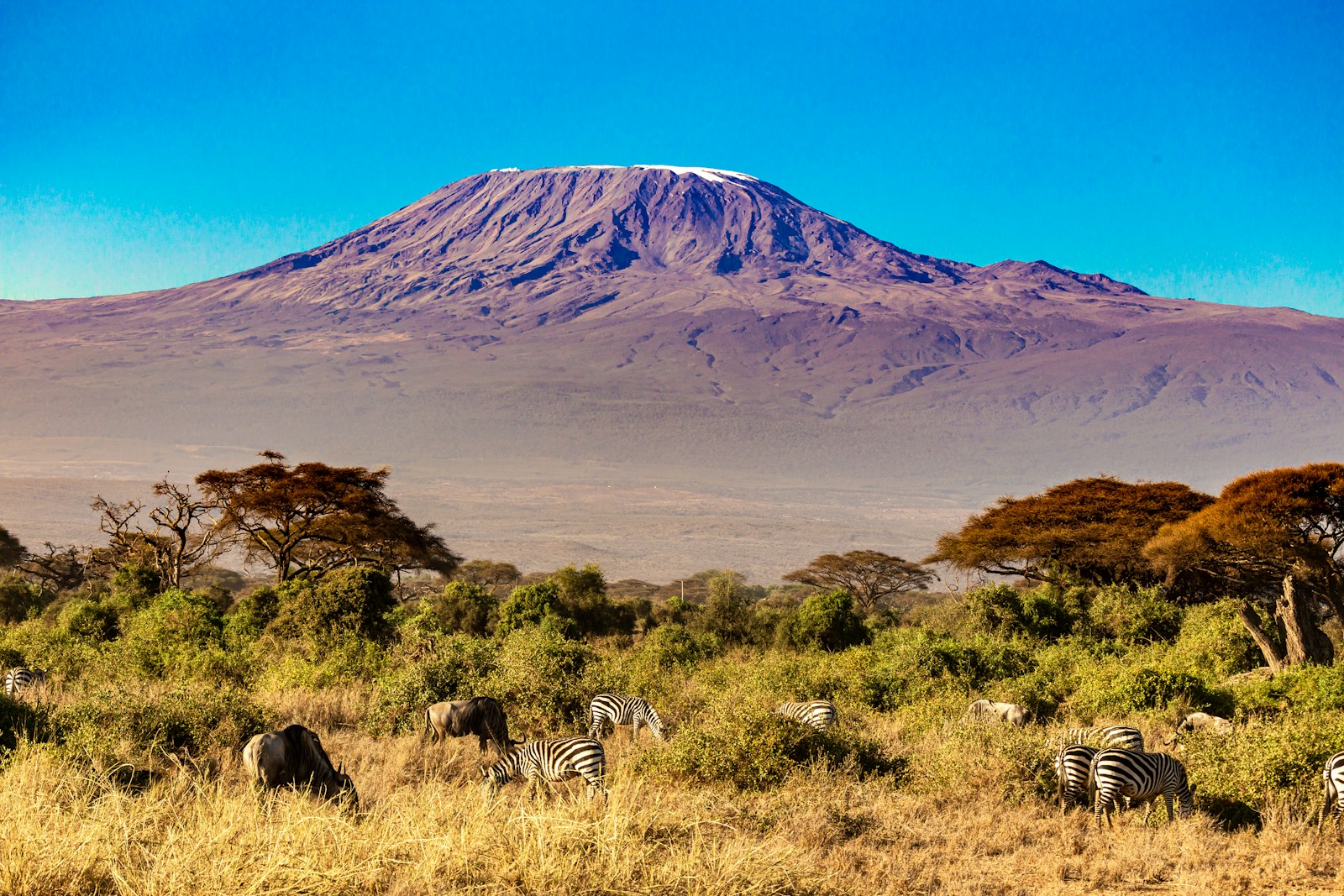
Mount Kilimanjaro is the world's highest freestanding mountain — a dormant stratovolcano rising 5,895 metres above the Tanzanian savanna, its snowcapped summit visible on clear days from 200 kilometres away across the plains. What makes it unique among the world's high peaks is its accessibility: no ropes, no technical climbing equipment, and no previous mountaineering experience are required to reach the summit. About 35,000 people attempt it annually, making it the most-climbed seven-summit peak, though the success rate varies dramatically by route and preparation — overall around 65%, but approaching 90% on well-acclimatised itineraries.
The mountain's five distinct climate zones make the ascent an extraordinary ecological journey compressed into a few days' walking. From the lower slopes' cultivated farms and banana groves you enter montane forest (1,800-2,800m) dense with Colobus monkeys, giant heather, and Impatiens flowers; then Afro-alpine moorland (2,800-4,000m) with giant groundsel and lobelia plants found nowhere else on Earth; then the alpine desert (4,000-5,000m), rocky and sparse; and finally the arctic summit zone — glaciers, ice cliffs, and the Uhuru Peak crater rim at 5,895m above sea level.
Six routes lead to the summit. Marangu (the "Coca-Cola route") is the only route with hut accommodation — it's the cheapest and most crowded, with a poor acclimatisation profile and the lowest success rate. Machame (the "Whiskey route") is the most popular with independent trekkers: steep, scenic, and with better acclimatisation through "climb high, sleep low" camping. Lemosho (7-8 days) approaches from the west and is widely considered the best balance of scenery, acclimatisation, and success rate. Rongai, approaching from Kenya, is the least crowded. All routes converge at Barafu High Camp (4,673m) for the final summit push.
Practical planning: Budget minimum 7 days for Machame or Lemosho for best acclimatisation; 5-day Marangu attempts have notably lower success rates. Park fees ($700+) are payable to the Kilimanjaro National Park Authority; a registered operator and guides are mandatory. Base in Moshi or Arusha pre- and post-climb. Altitude sickness prevention: acetazolamide (Diamox), high hydration, and slow ascent are the keys. Porters are central to the experience — tipping is significant income; use operators that pay fair porter wages. Combine with a Tanzania northern circuit safari.
Practical planning for Mount Kilimanjaro: the best time to visit is season-dependent, with a typical budget level of mid-range. Most travellers need three to five full days to cover the highlights without rushing — add extra time if you are combining Mount Kilimanjaro with nearby regions.
Priority experiences include local food, culture, and outdoor experiences. Do not miss the main sights and neighbourhoods.
Before you book, verify entry requirements for Tanzania — visa rules, passport validity, and any health documentation change frequently. Travel insurance with medical evacuation cover is worthwhile for international trips.
Where to stay: pick a walkable neighbourhood close to your main interests rather than the cheapest option far from the centre — transport costs and lost time often erase the savings. Book popular restaurants, guided tours, and peak-season accommodation early for high season dates.
Fit walkers who want a high-altitude challenge without technical climbing, anyone wanting to summit Africa, and those combining with Tanzania's northern safari circuit.
Compare prices and book your trip — hotels, flights, and guided tours.
* Links open partner sites. We may earn a commission at no extra cost to you. See our editorial policy.