adventure
🐪 Namibia
📍 Namibia · Africa
📍 Namibia · Africa
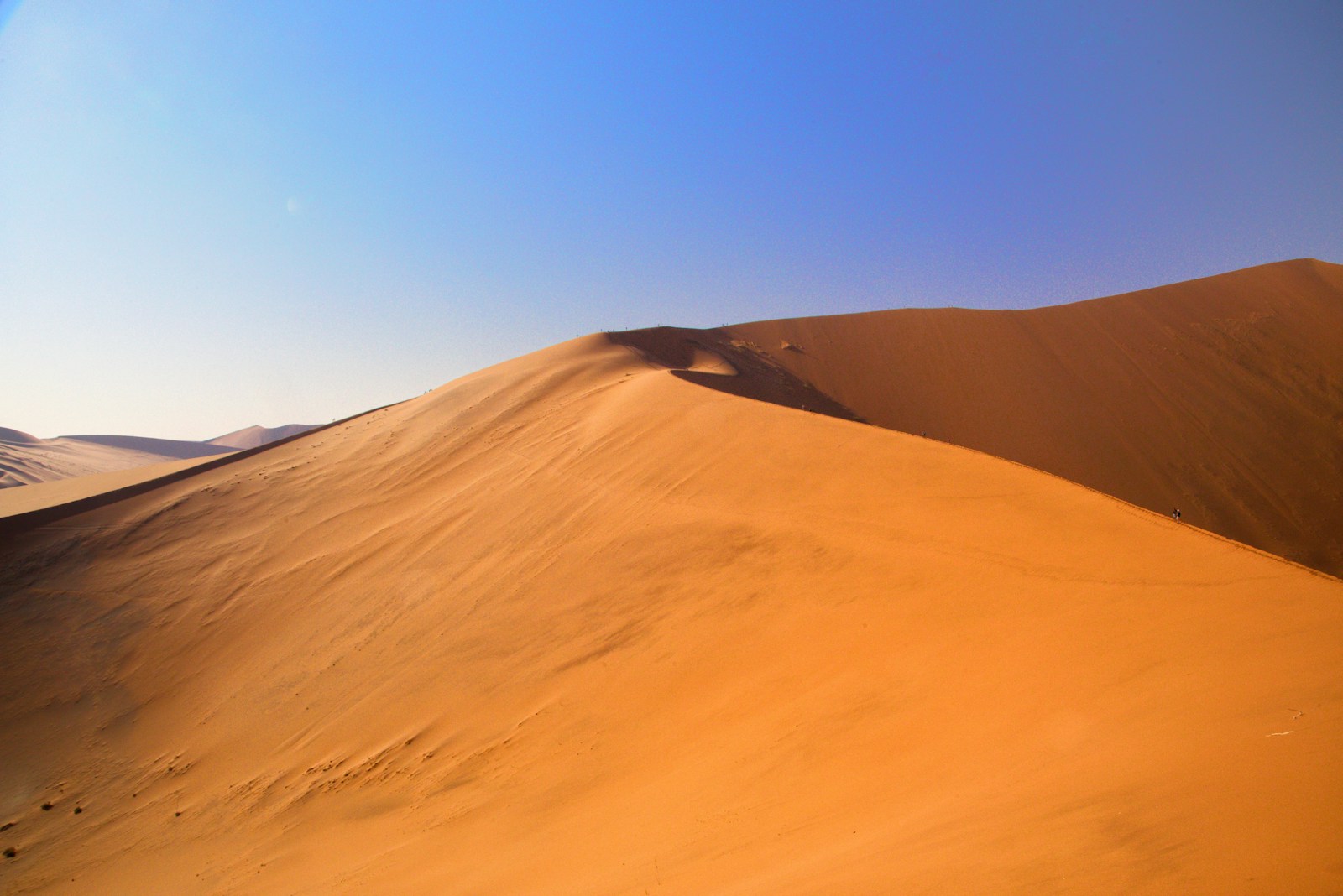
🏛 Sossusvlei Sand Dunes
Namibia is one of the world's most sparsely populated countries — 2.5 million people across a landmass twice the size of California — and the result is a landscape of extraordinary vastness and silence. The Namib Desert, the world's oldest at 55 million years, occupies much of the country's coast and interior; its dunes, the highest in the world, have accumulated over millennia of Saharan sand blown south by trade winds and deposited in the Sossusvlei basin. Namibia was the first country in the world to enshrine environmental protection in its constitution and is now a global model for community-based conservation.
Sossusvlei and the surrounding Namib-Naukluft National Park are among Africa's most photogenic landscapes. Dune 45 — so named because it stands 45 kilometres from Sesriem — rises 170 metres and is climbable in the cool pre-dawn hours; the view from the crest at sunrise, over an ocean of apricot and crimson dunes, is one of Africa's signature experiences. Deadvlei, a white clay pan surrounded by towering dunes, holds the preserved skeletons of camel thorn trees killed 900 years ago when the water source shifted — the dead trees, jet-black against white clay and orange sand, are among the most photographed subjects in Africa.
Namibia's other landscapes are as dramatic as Sossusvlei. Etosha National Park centers on a vast salt pan visible from space and holds excellent concentrations of lion, leopard, cheetah, black rhinoceros, and the Etosha variety of black-faced impala. The Skeleton Coast in the northwest — named for the whale bones and shipwrecks that line its fog-bound shores — is accessible only by permit and small aircraft, offering encounters with desert-adapted lions hunting Cape fur seal colonies. Fish River Canyon, at 160 kilometres long and 550 metres deep, is the second-largest canyon in the world.
Practical planning: Self-drive is the ideal way to experience Namibia — roads are well-maintained and distances are navigable in a standard sedan except for some park tracks that require 4WD. Rent in Windhoek and drive south to Sossusvlei, north to Etosha. Best time is May to October (dry season); July-August nights are very cold in the desert. Namibia has the darkest skies of any African country and is a world-class astrotourism destination — the NamibRand Reserve is an International Dark Sky Reserve.
Practical planning for Namibia: the best time to visit is season-dependent, with a typical budget level of mid-range. Most travellers need three to five full days to cover the highlights without rushing — add extra time if you are combining Namibia with nearby regions.
Priority experiences include local food, culture, and outdoor experiences. Do not miss the main sights and neighbourhoods.
Before you book, verify entry requirements for Namibia — visa rules, passport validity, and any health documentation change frequently. Travel insurance with medical evacuation cover is worthwhile for international trips.
Where to stay: pick a walkable neighbourhood close to your main interests rather than the cheapest option far from the centre — transport costs and lost time often erase the savings. Book popular restaurants, guided tours, and peak-season accommodation early for high season dates.
Self-drive adventurers, landscape photographers, stargazers, and anyone who wants Africa's most dramatic and empty landscapes.
Compare prices and book your trip — hotels, flights, and guided tours.
* Links open partner sites. We may earn a commission at no extra cost to you. See our editorial policy.