adventure
🦍 Rwanda
📍 Rwanda · Africa
📍 Rwanda · Africa
🏛 Mountain Gorilla Trekking
Rwanda's transformation since the 1994 genocide — from a country that experienced one of the 20th century's worst atrocities to one of Africa's most stable, clean, and progressive nations — is one of the most remarkable stories in modern history. Today it is among the continent's safest destinations, with Kigali ranking as Africa's cleanest and most well-organised capital city. The country has banned plastic bags entirely, built a functioning public health system, and channeled the revenues from high-end tourism directly into conservation and community development.
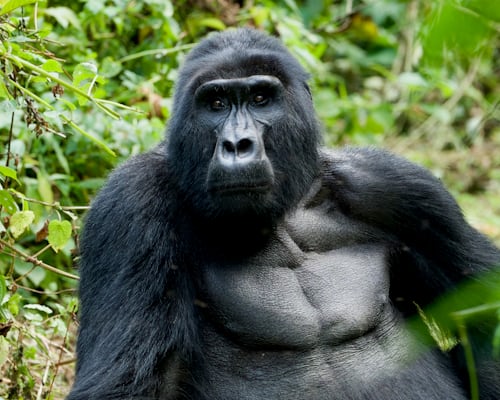
Mountain gorilla trekking in Volcanoes National Park in Rwanda's northwest is one of the most extraordinary wildlife experiences on Earth. Just over 1,000 mountain gorillas remain in the wild, divided between the Virunga massif shared by Rwanda, Uganda, and the DRC, and Uganda's Bwindi Impenetrable Forest. A Rwanda gorilla permit costs $1,500 — deliberately expensive to limit visitor numbers and fund the rangers who protect the gorillas. The hour spent with a habituated gorilla family — watching silverbacks rest, juveniles play, and mothers nurse infants within touching distance — is transformative in a way that photographs cannot capture. The trek ranges from 30 minutes to six hours depending on where the gorillas have moved that morning.
Beyond the gorillas, Rwanda offers golden monkey trekking in the same Volcanoes park — a smaller and quicker permit at $100, yielding time with bamboo-dwelling monkeys in volcanic forest. Nyungwe Forest National Park in the southwest has one of Africa's oldest rainforests with chimpanzee trekking and a spectacular canopy walkway. Lake Kivu — Rwanda's western border — is a crater lake of extraordinary beauty with peninsula villages, kayaking, and coffee boat tours. The Kigali Genocide Memorial is essential and devastating; 250,000 victims are buried in the grounds.
Practical planning: Rwanda is extremely safe, extremely clean, and expensive by African standards (gorilla permits plus lodge accommodation easily reaches $2,000 per day). Best months are June-September and December-February (dry seasons). Flying into Kigali and combining with Uganda gorilla trekking or a Tanzania safari is a classic East Africa itinerary. The country requires no malaria prophylaxis in Kigali but does in rural areas.
Practical planning for Rwanda: the best time to visit is season-dependent, with a typical budget level of mid-range. Most travellers need three to five full days to cover the highlights without rushing — add extra time if you are combining Rwanda with nearby regions.
Priority experiences include local food, culture, and outdoor experiences. Do not miss the main sights and neighbourhoods.
Before you book, verify entry requirements for Rwanda — visa rules, passport validity, and any health documentation change frequently. Travel insurance with medical evacuation cover is worthwhile for international trips.
Where to stay: pick a walkable neighbourhood close to your main interests rather than the cheapest option far from the centre — transport costs and lost time often erase the savings. Book popular restaurants, guided tours, and peak-season accommodation early for high season dates.
Serious wildlife travellers, conservation-minded visitors, and anyone combining East Africa's most powerful political history with its most extraordinary wildlife encounter.
Compare prices and book your trip — hotels, flights, and guided tours.
* Links open partner sites. We may earn a commission at no extra cost to you. See our editorial policy.