adventure
💧 Victoria Falls
📍 Zimbabwe/Zambia · Africa
📍 Zimbabwe/Zambia · Africa
🏛 Victoria Falls
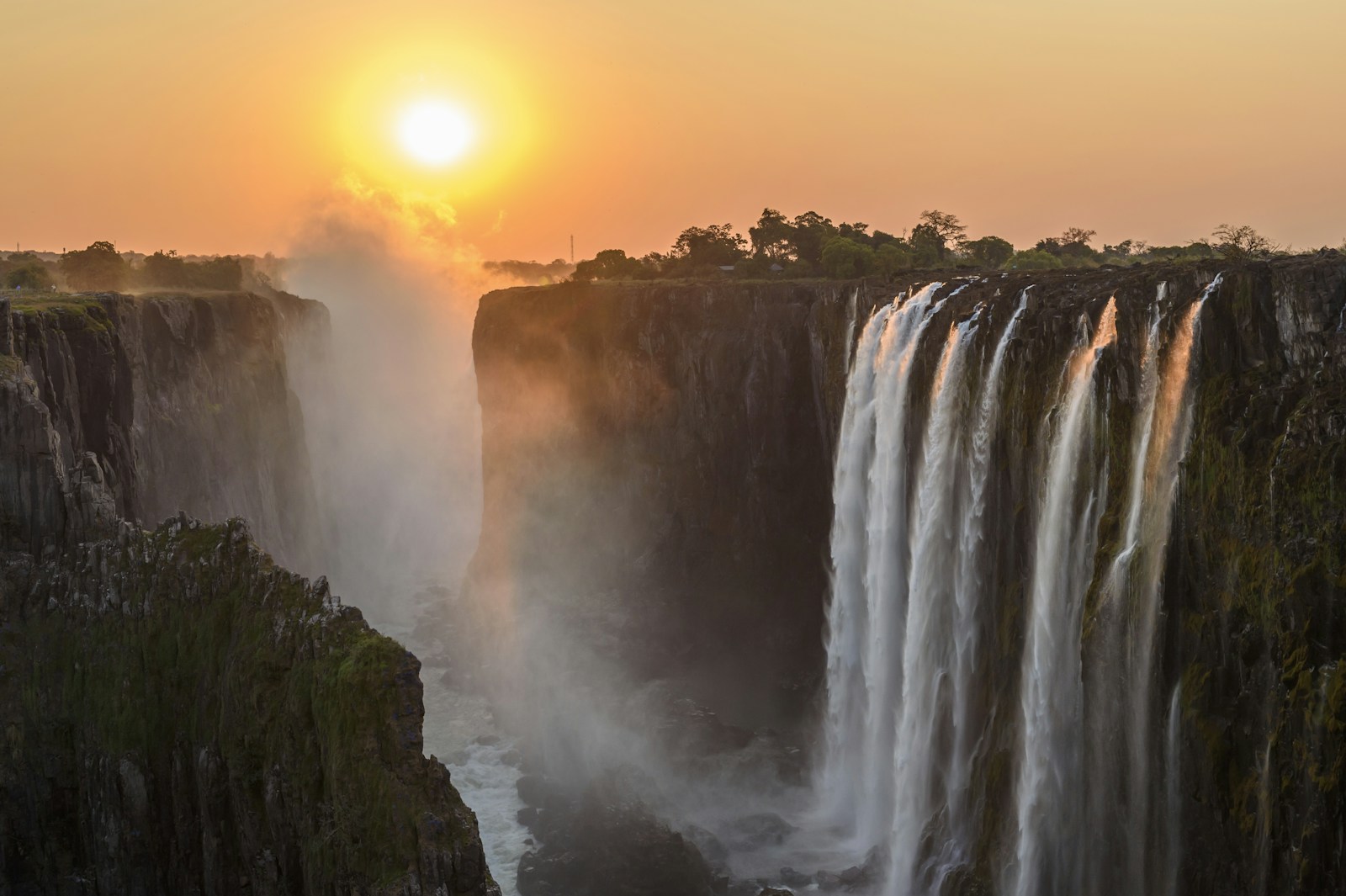
Victoria Falls is the largest waterfall on Earth by a measure that combines width and height — the entire Zambezi River, one kilometre wide, drops 108 metres into a narrow basalt gorge, generating a cloud of spray and thunder audible from 40 kilometres away. The Kololo people named it Mosi-oa-Tunya — "the smoke that thunders" — long before David Livingstone became the first European to see it in 1855. It straddles the Zimbabwe-Zambia border and both countries offer complementary perspectives on the falls and the adventure activities surrounding them.
The falls themselves are best experienced by walking the network of paths on the Zimbabwe side, where successive viewpoints emerge from rainforest kept permanently wet by the spray: Main Falls, Devil's Cataract, Danger Point, and the Knife-Edge Bridge. The Zambia side offers the iconic Devil's Pool — a natural rock pool at the very lip of the falls, accessible in low-water season (September to December) where swimmers sit metres from a vertical kilometre-wide drop. The lunar rainbow — a full arc of refracted moonlight in the spray on nights around the full moon — is one of the natural world's rarest and most beautiful sights.
For adrenaline, the Victoria Falls area delivers an extraordinary concentration. The 111-metre Zambezi bridge offers bungee jumping, a gorge swing, and a zipline spanning the gorge. Grade 5 white-water rafting through 23 rapids below the falls is one of the world's best river experiences (high-water season May-July reduces access; prime rafting is August-December). Elephant-back safaris, mokoro canoe trips in the upper Zambezi, sunset cruises with hippos and elephants drinking alongside the boat, and helicopter flights over the falls all operate year-round.
Practical planning: The Zimbabwe side (Victoria Falls town) has the better infrastructure and most tour operators; the Zambia side (Livingstone) feels more authentic and less touristy. A combined KAZA UniVisa covers both countries for most nationalities. Peak flow is April-June when spray can soak you completely; September-December has lower flow but clearer views and permits Devil's Pool access. Malaria prophylaxis is recommended for the area.
Practical planning for Victoria Falls: the best time to visit is season-dependent, with a typical budget level of mid-range. Most travellers need three to five full days to cover the highlights without rushing — add extra time if you are combining Victoria Falls with nearby regions.
Priority experiences include local food, culture, and outdoor experiences. Do not miss the main sights and neighbourhoods.
Before you book, verify entry requirements for Zimbabwe/Zambia — visa rules, passport validity, and any health documentation change frequently. Travel insurance with medical evacuation cover is worthwhile for international trips.
Where to stay: pick a walkable neighbourhood close to your main interests rather than the cheapest option far from the centre — transport costs and lost time often erase the savings. Book popular restaurants, guided tours, and peak-season accommodation early for high season dates.
Adrenaline seekers, adventure travellers, and anyone wanting the most dramatic natural spectacle in southern Africa.
Compare prices and book your trip — hotels, flights, and guided tours.
* Links open partner sites. We may earn a commission at no extra cost to you. See our editorial policy.